
Storm Damage Roof Repair in Broken Arrow, OK
After a storm you've got two things to deal with, the damage itself and the record of what happened up there. Any repair starts with our roofers reading both, and asking costs nothing.
A repaired roof and a record of the damage
Hail cracks the mat inside a shingle and leaves the surface looking untouched. So the work after a storm splits in two: putting the roof back together, and writing down what it did before anybody changes it. Ask Broken Arrow Roofing Co and you'll get both in one visit, in that order.
Nothing here has to be decided the day the number lands. If a slope needs a repair and doesn't need a whole new roof, that's what our roofers will tell you, and the smaller job is what goes on the estimate. If it turns into an insurance claim, the claim's yours to file and the dated photographs go with it.
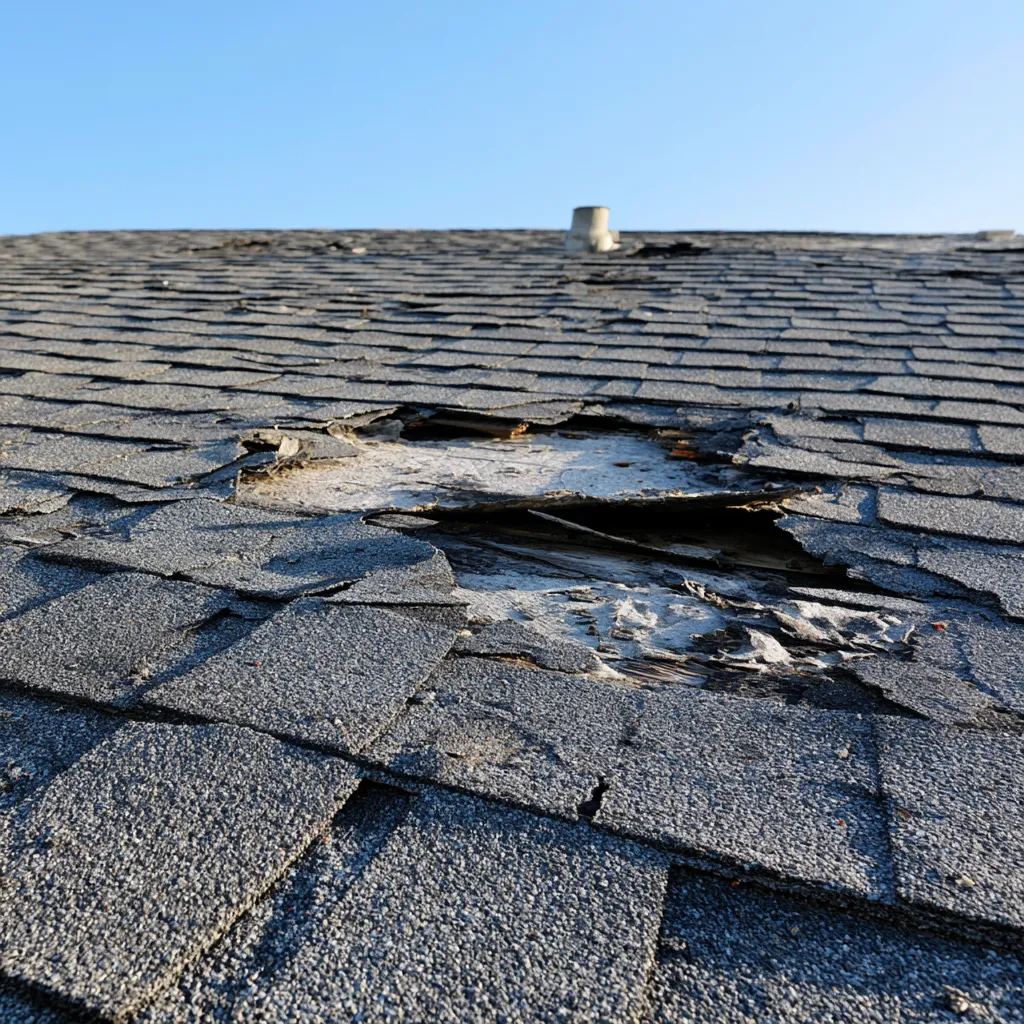
What storm and hail repair covers on a Broken Arrow roof
Storm repair on asphalt is mostly replacing the pieces that took the hit, and they're not all shingles. Your roofer handles the field shingles, the metal at the walls and valleys, the rubber at the pipes and the caps along the ridge as separate lines, because they don't fail the same way.
- 01Field shingles replaced
- Bruised and creased tabs come out, and matched shingles go back into the same courses. Lay a new shingle over a cracked one and you've still got the crack.
- 02Flashing and vent boots
- Bent step and valley metal comes off and new metal goes in. Your roofer swaps split rubber collars at the pipes outright, because sealant over a split boot buys you one season and no more.
- 03Ridge and hip cap
- Caps sit at the highest point and catch hail from every direction, so they take damage on slopes that are otherwise fine. New cap goes down in the same pass as the field shingles.
- 04Soft metals and accessories
- Gutter, downspout, drip edge, vent hoods and the flashing around a skylight all dent at hail sizes a shingle shrugs off. They came off the same storm, so they go back on the same trip.
- 05Decking where it opens
- Plywood only shows itself once the shingles above it come off, and the soft or wet sheathing comes out before anything goes back down. That's the part of a storm repair that can move the number, and you'll hear about it the day it turns up.
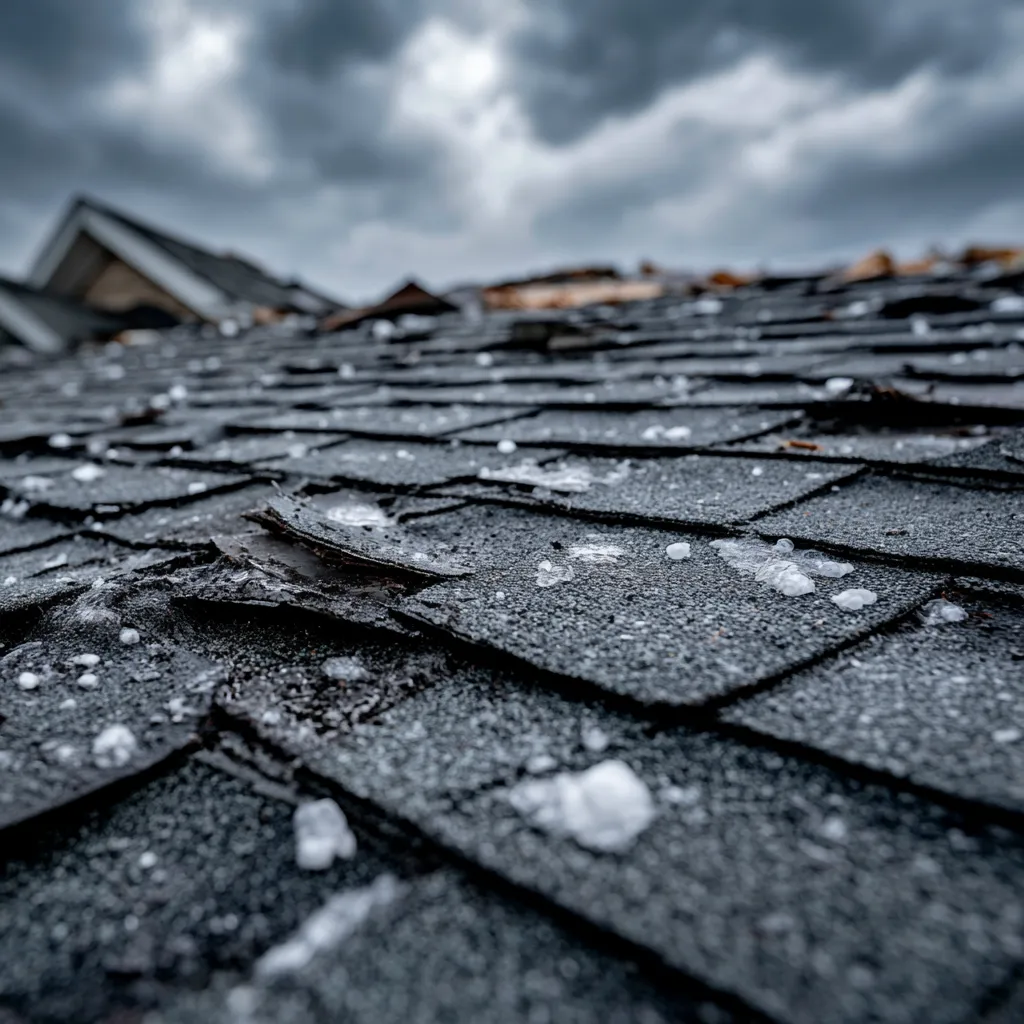
Which of those lines your house needs comes out of the walk itself, and it runs anywhere from one slope of roof repair to a full replacement if the covering was near the end before the hail ever arrived.
You have the damage record before the work begins
Your roofer photographs and measures the damage first, and starts pulling shingles second.
Walk and photograph
Your roofer goes up, works slope by slope, and photographs the damage where it sits with the date on the file. Nothing's coming off the roof during this part.
Write the damage record
Hail marks and wind creases go on the list apart from each other, along with the metal, the boots and the caps, and the repair for each one is priced beside it. You keep that document whether the work goes ahead or not.
Repair to match
New shingles go in tight against the courses on either side of them, and the split metal and rubber pieces go back new. When it's done the slope looks like the rest of the roof again.
Hail damage a roof shows before a leak does
A hail-bruised roof keeps working for a while, and then it starts giving ground in ways you can see from the yard. Here's what shows up in the months after a storm, and none of it needs water in a ceiling first.
- Granule loss that keeps going: a bruised spot sheds its surface faster every season until there's bare mat showing where the impact landed.
- Shingle edges curling at the crack: the mat splits open along the bruise as it heats and cools, and the tab starts lifting on that line.
- A tab lifting further each wind: a creased shingle doesn't re-bond, so every gust after the storm works the same tab looser.
- A vent boot splitting wider: the rubber collar keeps opening along the crack the hail started, a little more each summer.
- Sheathing darkening under the shingles: water sits in the plywood and spreads there long before it's anywhere near drywall, which is why your roofer looks at the deck wherever a repair opens the roof.
- Two storms stacked on one slope: damage nobody wrote down the first time is hard to tell apart from whatever the next hail day added.
Any one of these is reason enough to get somebody up on the roof, and none of them is an answer on its own. The Tulsa County storm record lists the dated days behind you, and the write-up on that record covers what it can't tell you about one address.
The weather a Broken Arrow roof stands in
If your roof is more than a few years old, it's already been through several of these. Tulsa County has logged 30 hail days in the last four years. The hardest gust anywhere on that record is 100 mph, and it wasn't measured here: those two readings sit on the county storm record out of Wekiwa and Garden City, while the worst Broken Arrow itself filed is 81 mph. Our roofers treat a bruised slope and a creased one as two different repairs.
- 01Asphalt over a deck
- Asphalt shingle over a plywood deck is the common build here, and it's the assembly hail is hardest on. 1992 is the middle year for houses in this town, so half of what our roofers walk is older.
- 02Hail falls in lanes
- A storm can strip one street and leave the next one alone, so a county record can't answer for a single address. That's why somebody walks your slopes, and why a map is no substitute for it.
What Broken Arrow homeowners ask after a hailstorm
What comes up after a hailstorm is usually about order and timing, and these are the ones our roofers hear most.
Q1Can hail damage be repaired, or does the whole roof have to go?
Q2Will new shingles match what is already up there?
Q3Should the repair happen before or after the insurance side of it?
Q4What happens if the wood underneath turns out to be bad?
Q5Who actually shows up to do the repair?
Have your storm damage documented
Say which storm you've got in mind and where the house is, and your roofer walks the slopes, photographs what the hail and the wind each did, and calls you about what it takes to put it right. That call comes with the photographs and the figure, and you can ask us to stop at any point.