Roof Repair in Broken Arrow, OK
Our roofers trace the leak back to the place it's getting in, then price the repair from up there. Send the address and the room it's showing up in, so our roofer can start on the slope above it.
The stain on the ceiling is almost never under the hole.
Water can travel the length of a rafter before it drips, so where does the search start when you send Broken Arrow Roofing Co the address? Your roofer goes up and works uphill from the stain until the opening turns up.
Most of the time it's one part that gave out. The rubber collar around a plumbing vent cracks in Oklahoma sun long before the shingles near it are worn, and a split you could cover with a thumbnail will mark a ceiling in the next room. The climb is the same on a 1970s house west of Main Street and on a newer place out past the Creek Turnpike, and what comes back doesn't change with the address. Working out which part it is isn't your job.
What a Broken Arrow roof repair covers
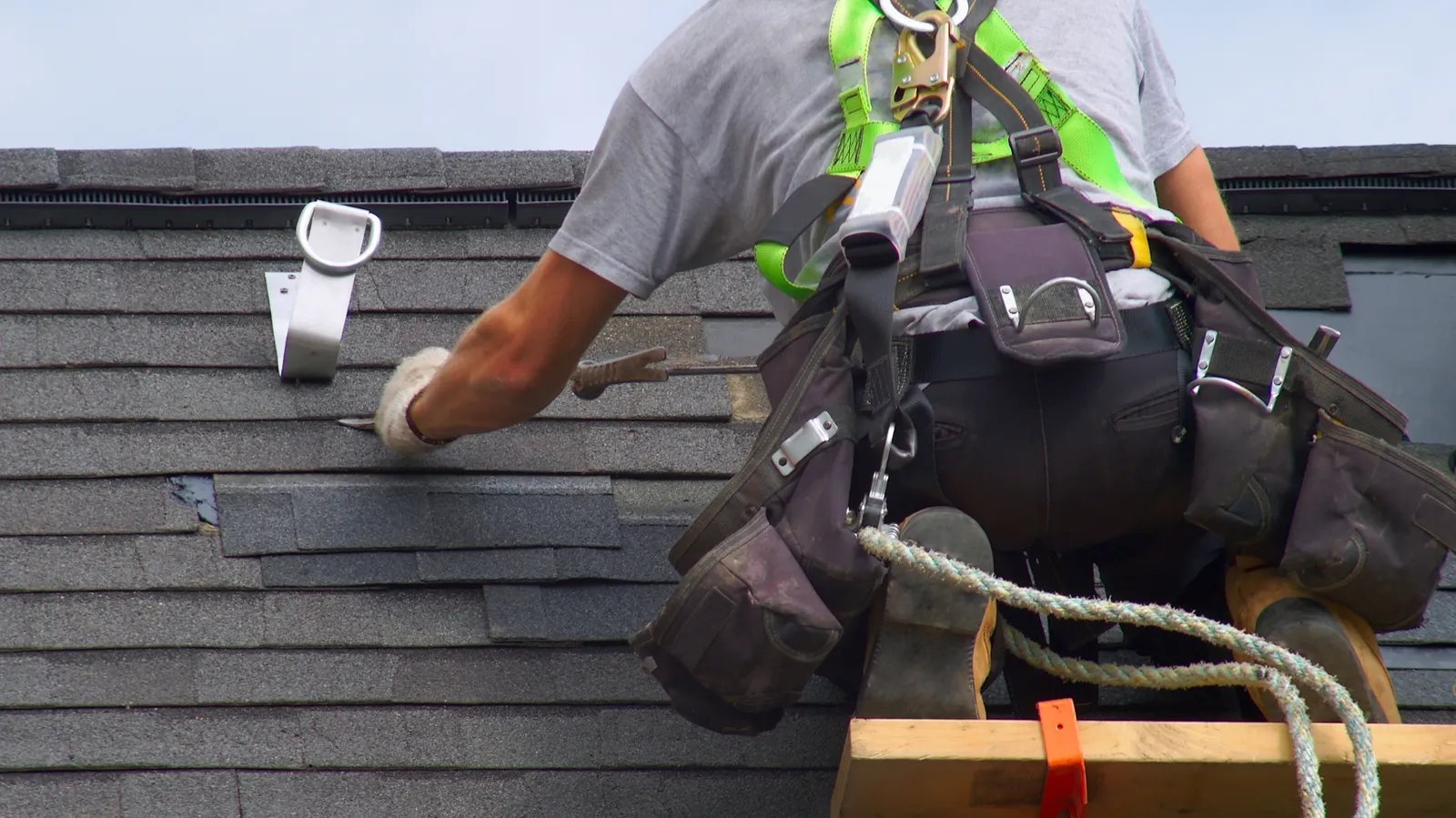
A repair is aimed at the one part that gave out, which is why it's a much smaller job than a new roof. It also only works when the failure really is in one place, and these are the parts it usually turns out to be.
- 01Tracing the entry point
- The search starts where the water shows and works uphill from there.
- 02Pipe boots and collars
- The rubber cracks years ahead of the shingles around it.
- 03Step and counter-flashing
- Reset and resealed where brick and metal have pulled apart.
- 04Valley work
- Valleys carry the most concentrated water on the whole roof.
- 05Sectional shingle replacement
- Creased courses out, new ones in on the original nail line.
- 06Decking opened where soft
- Wood that's gone spongy comes out before anything covers it.
- 07Sealing, where sealing works
- Your roofer reseals a sound edge in material rated for Oklahoma sun.
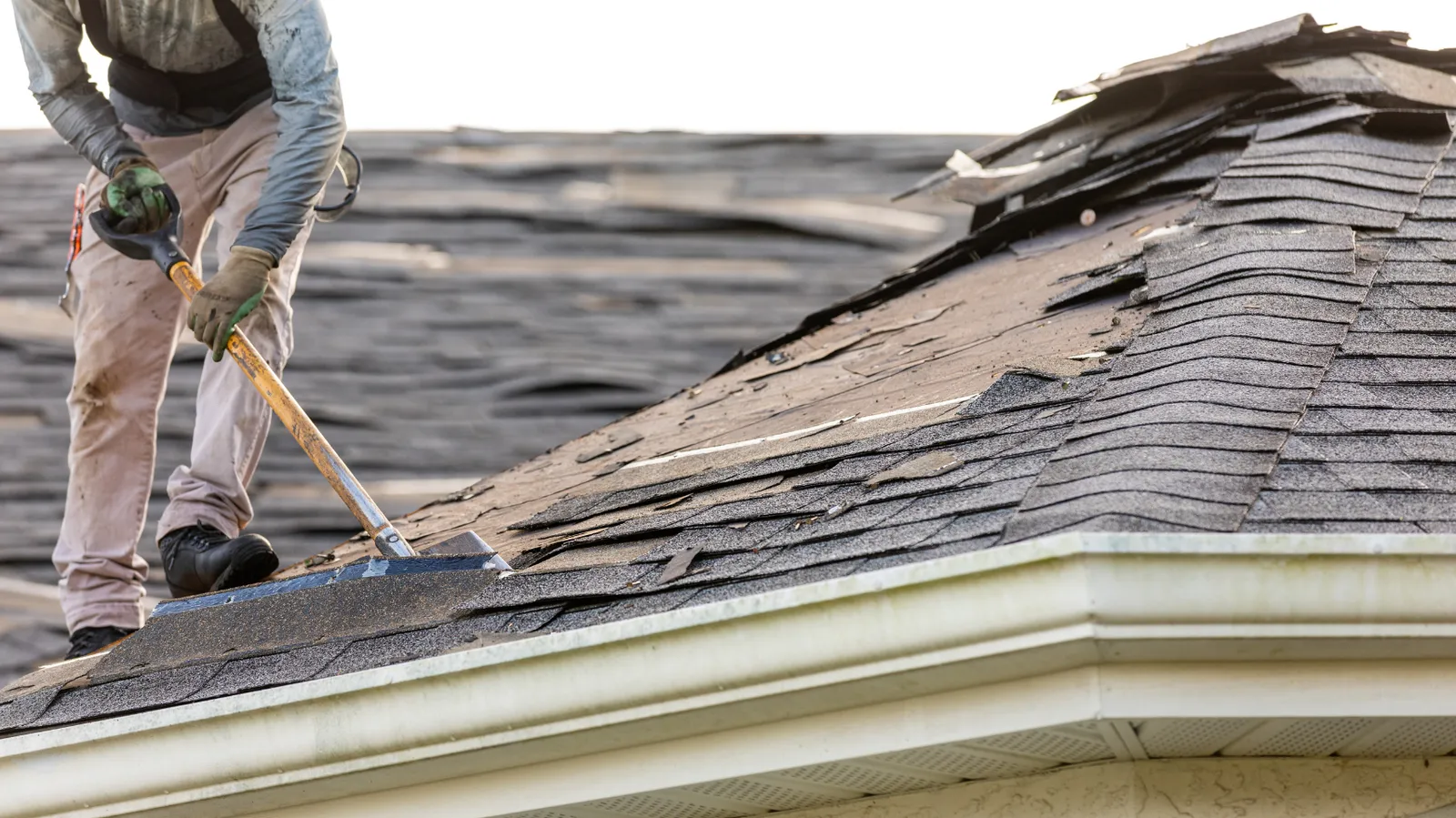
If the search turns up a second and a third opening in unrelated places, you hear that before anyone starts. That's a bigger job than a repair, and it's priced as one.
Find it, prove it, fix it.
The first part takes as long as it takes, because the roofer may have to chase a hidden leak across a whole slope. Once there's an opening to work on, the rest of it is short by comparison.
Trace it uphill
Water runs the deck before it drops, so the search starts at the stain and works up the slope. Your roofer keeps going until the opening itself turns up.
Prove what failed
Nothing closes back over until you've seen what gave out, photographed where it sits. Sealing over a failure nobody looked at is how the same leak comes back in the spring.
Rebuild the part
The roofer pulls the boot, the flashing run or the creased course out and sets a new one on the original nail line. Fasteners go where that material's own pattern puts them, and the sealant goes back only on the edges that carried it to begin with.
Wear and leaks that point to a repair
You'd notice all of these from inside the house or standing in the yard. Each one points at a single place instead of the whole roof.
- One stain, one room: a single mark that isn't spreading usually traces back to one failed detail overhead.
- Shingles in the yard: tabs that let go on one slope tell your roofer which slope to start on.
- A drip only in hard rain: an opening small enough to need a downpour is small enough to rebuild.
- Grit piling in the gutters: some granule loss is ordinary wear, but a fresh pile after one storm points at that slope.
- A stain near the chimney: water at masonry usually means the flashing in that joint has worked loose.
- Daylight in the attic: a pinhole of light through the decking is a hole, and where the light is, the water is.
- A mark that keeps coming back: a ceiling that dries between rains and stains again is still letting water in.
A repair holds when the failure is in one place. It can't fix a roof giving out in several places at once, and it can't fix decking that's gone soft under the shingles, because new material over bad wood fails the way the old material did. A free roof inspection is what separates the two, and it's the same climb whether the answer is a repair or a full replacement.
Repair costs on a Broken Arrow roof
A repair is priced on what it takes to reach the failure and rebuild it. The size of your roof barely enters into it. The same cracked boot can carry two different numbers on two houses, because one of them is a single story with the trouble spot a few feet off the ladder.
The other half is what's under the shingles. Decking that's stayed dry keeps the job small, and wood that's gone soft has to come out, which nobody knows until the shingles over it come up.
See the replacement ranges- How much has to come off to reach it
- One story or two, and how the ladder sets
- Whether the decking under it comes out too
- How many separate places are letting water in
- Whether that same detail has been patched before
- Matching new material to what's already up there
What gives out first on a Broken Arrow roof
Between hailstorms, sun and wind do the steady damage here, and they don't work on a roof evenly. The worst gust on the county storm record is 100 mph, logged elsewhere in Tulsa County; the strongest filed at Broken Arrow itself is 81 mph. Wind like that goes after what's rubber, sealed, or bent around something else.
- 01Rubber before shingles
- The collar around a plumbing vent is the shortest-lived thing up there, and sun shortens it. How long the rest lasts depends on whether the attic can breathe, which attic ventilation and roof life covers.
- 02Brick meets metal
- A chimney and its flashing move on different schedules, so the joint works loose and water lands on a ceiling away from the chimney.
- 03Creases before gaps
- A tab that lifted and dropped back has lost its seal, so wind damage here shows up as a course or two on one slope.
- 04Old patches, found again
- A detail sealed once and failed again needs the part rebuilt, so old material comes off first.
None of this is unusual here. A roofer sees all four on one trip.
Repair questions that come up around Broken Arrow
Broken Arrow houses raise the same handful of repair questions, mostly because of what the sun and the wind do to the same few parts.
Q1Is a repair just money spent on a roof that's going anyway?
Q2Why is the stain nowhere near the damage on the roof?
Q3There's water coming in right now. What do I do first?
Q4Will the new shingles match the ones already up there?
Q5Can a repair wait until the rainy stretch is over?
Get a repair quoted off the roof
Your roofer goes up, finds the opening, and comes back down with the repair written out part by part, decking included if the wood under it turns out to be soft. It doesn't have to be decided while they're still there, and the estimate holds long enough to compare against another.