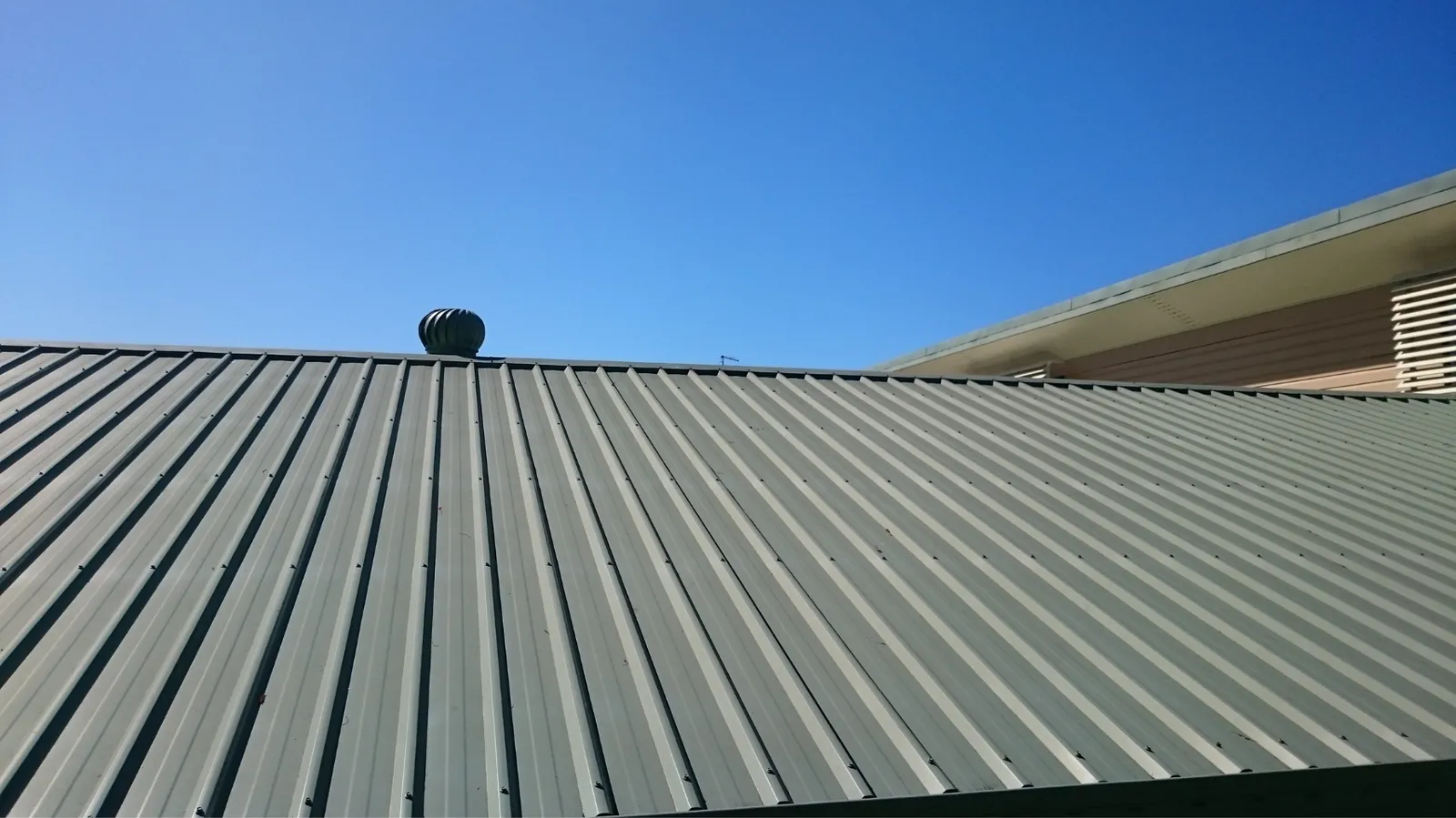
Metal Roofing in Broken Arrow, OK
Whether metal belongs on your house comes down to the roof you've already got. Find out what yours would take, then sit with the answer as long as you like.
How standing seam differs from a Broken Arrow shingle roof
Somebody floated metal after the last hail day. Now you're weighing whether that's a genuine answer for your house or a more expensive finish.
So which is it? Standing seam is a different assembly from the shingles up there now, and the money goes into the fastening and the underlayment as much as into the steel. Ask Broken Arrow Roofing Co for a measure-up and one local roofer reads what you send, walks your roof, and tells you what it'd take. Plenty of roofs around here aren't candidates for it, and you'll hear that before anybody prices panels.
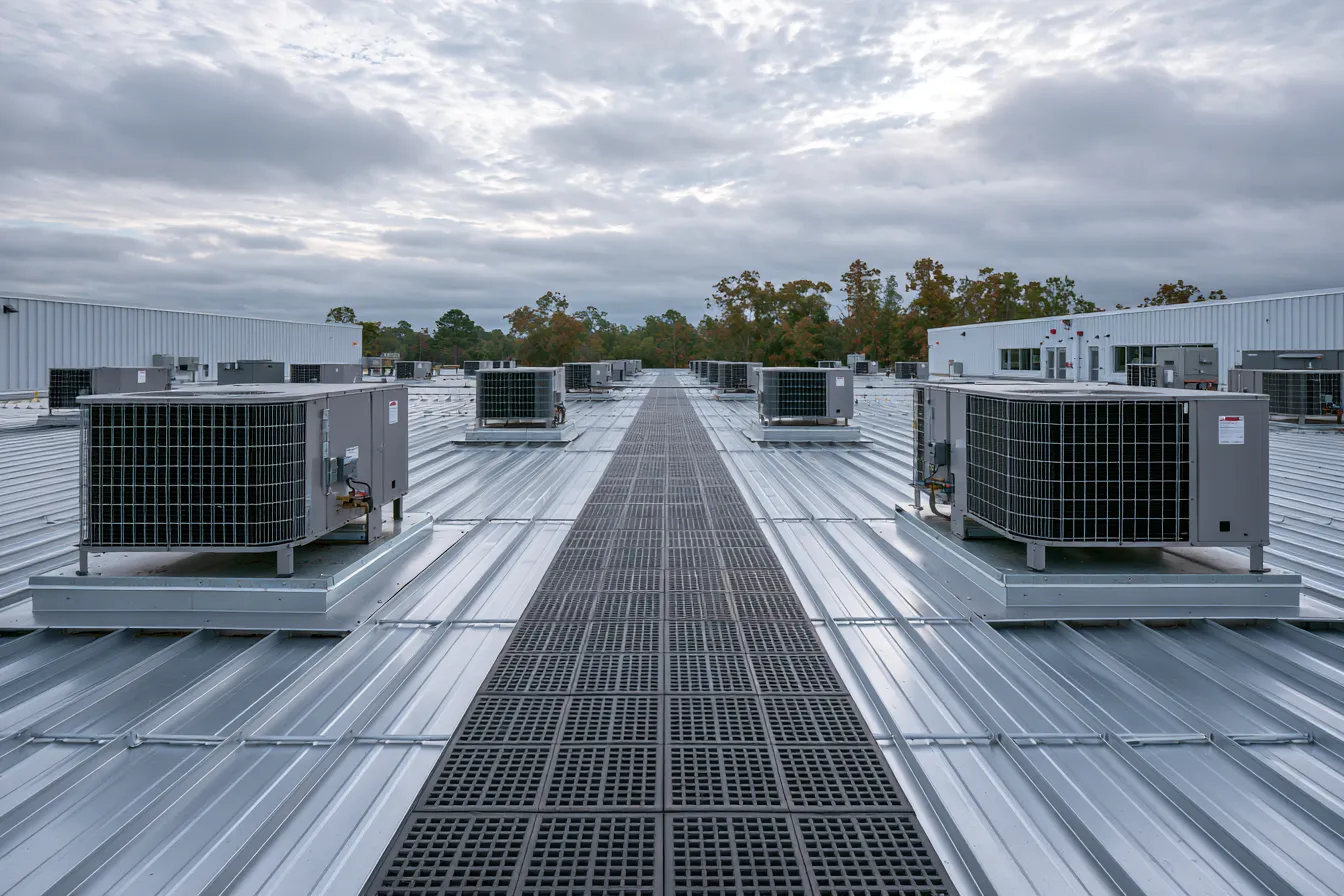
What a standing-seam metal roof includes on a Broken Arrow home
A metal roof goes on once, so what sits under the panels matters as much as the steel does. These go on in order, deck first and trim last, and each one is its own line of material.
- 01Tear-off to the deck
- Every old layer comes off so soft decking shows itself before a panel hides it. Catch a bad board now and it's a sheet of plywood; catch it later and panels come back off.
- 02Underlayment across the field
- Synthetic over the whole deck, with a self-adhering membrane at the valleys and the eaves. Panels shed water, they don't seal it, so this layer is what stops wind-driven rain.
- 03High-temp valley membrane
- Rated for the heat that builds under steel in an Oklahoma August. An ordinary membrane can soften and creep there, and a valley carries the runoff of two planes at once.
- 0424-gauge steel panels
- Thicker than the 26 and 29-gauge sheets sold for barns and shop buildings. Gauge runs backward, so the smaller number is the heavier steel and it's the first line to read on any metal quote.
- 05Clips and locked seams
- The seam folds over a clip that still lets the panel move as it heats and cools. Nothing holding the roof down sits out in the sun, and that's the whole difference from a screw-down panel.
- 06Trim, flashing, penetrations
- Ridge, rake, wall and pipe details are bent to match your panel profile. Metal roofs give up at these transitions long before they give up out in the field.
- 07Final seam walk
- Once the panels are down, your roofer walks the roof again and goes along every seam, clip line and termination. It's the pass that catches a fold that didn't close all the way, or a pipe boot that didn't land square.
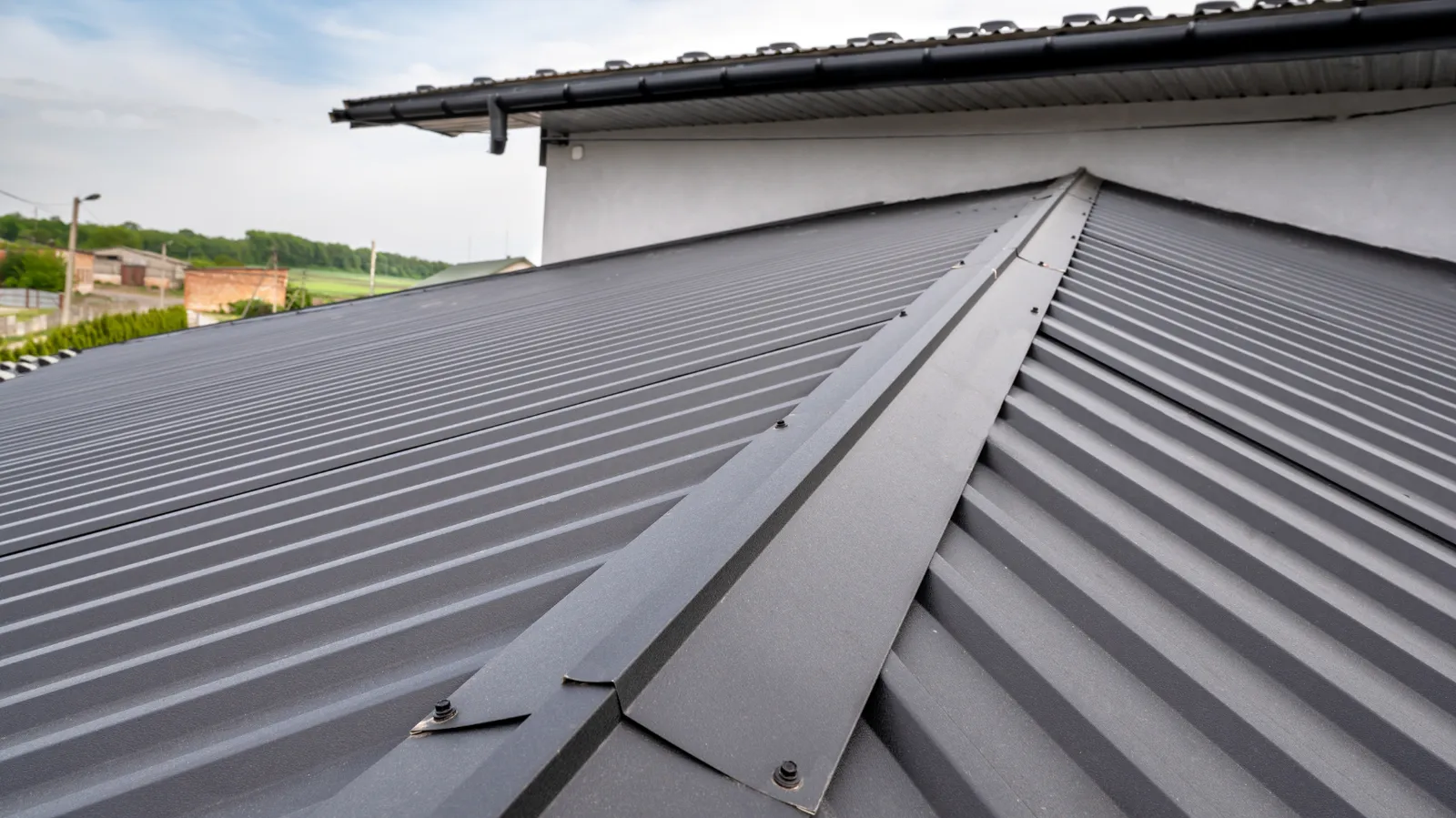
Your own roof decides how many of those lines are in play, and the permit and inspection steps are the same ones any new roof in town goes through.
Panels formed for the lengths of your Broken Arrow roof
Your roofer measures the roof plane by plane, then the panels are formed to those lengths.
Measure the roof
Your roofer walks it and takes each plane's actual lengths, plus every pipe, wall and valley the panels have to meet. That's what a metal quote is built on, and it's why a number over the phone isn't one.
Form the panels
Panels are roll-formed to your roof's own lengths, so a slope can run ridge to eave in one piece where the run allows. That's what keeps seams out of the middle of a plane.
Set clips and seam
Clips fasten to the deck and the panel hooks over them, then the seam is folded or snapped shut over the top. The panel can still expand and contract with the heat, which is why nothing is screwed through the face.
When a Broken Arrow roof is a candidate for metal
Metal is the expensive answer, so the question is whether anything about your roof or your plans makes it the right one. Most houses here match one or two of these, and a couple of them point the other way.
- Staying put for years: the longer you own the house, the more an asphalt roof you never have to buy again is worth to you.
- Long, simple slopes: a roof with few valleys and long straight runs is the cheapest shape to panel.
- A cut-up hip roof: dormers, hips and valleys mean more hand-formed trim and a bigger number.
- Low pitch at the back: some panel systems handle shallow slopes that shingles aren't rated for.
- Shingles with years left: a covering that isn't finished yet is a reason to wait.
- Selling within a few years: say so early, because it changes which answer your roofer gives you.
Your roofer works out which of these your house has, up on the roof. A roof inspection is the visit where you hear it.
Standing seam pricing in Broken Arrow, against asphalt
The roof itself decides what a metal job runs here: the gauge, the seam system, how cut up the roofline is, what has to come off first, and how a truck reaches it.
Geometry is the driver most people underrate. Say your longest plane runs forty feet and the panels come sixteen inches wide: that's thirty panels and thirty seams up one slope, each formed, clipped and closed by hand. Add a dormer and the count moves, so the figure follows a measure-up.
The estimate names the gauge, the seam system, the trim and a number against each. If tear-off opens soft decking, that's new material on its own line. The cost page carries what's sourced for asphalt here.
See the sourced cost ranges- Panel gauge, whether it runs 24 or 26
- Whether the seams are mechanically seamed or snap-lock
- How many valleys, hips and dormers the roofline turns
- Every pipe, vent and skylight the panels work around
- How many layers come off before panels go on
- The driveway, the trees, and where steel can land
What steel has to take on a Broken Arrow roof
Wind is the load that decides how a panel roof is fastened here. A 70 mph straight-line gust was logged at Broken Arrow itself on June 29, 2024, one of this town's own rows on the county storm record. Uplift pulls at the edges and seams first, so clip spacing and rake trim matter more than the panel mid-slope.
- 01Hail marks the finish
- Big hail can dent a panel, and a dent is usually an appearance problem while the panel keeps shedding water. Some policies carry a cosmetic-damage exclusion written with metal in mind, so what the hail record shows is worth reading alongside yours.
- 02Heat under the panels
- Steel in an Oklahoma August drives deck temperatures past what an ordinary valley membrane is built for, so high-temp membrane goes in at the valleys and eaves.
- 03Older decking underneath
- The typical Broken Arrow house dates to about 1992, so plenty of these roofs sit on a second covering over original decking. Panels lock down over whatever is under them, so your roofer checks the deck first.
A new roof here closes out with a final city inspection, run out of Development Services at City Hall. The permit steps live on their own page.
Metal roofing questions, answered straight
Ask your roofer to go further on any of these while they're up on the roof.
Q1What decides the price of a metal roof?
Q2Does hail dent a metal roof?
Q3Is a metal roof loud in the rain?
Q4Why not the cheaper panel used on shop buildings?
Q5Who covers a metal roof if something goes wrong?
Price a metal roof for your home
Ask for a measure-up and your roofer walks the roof, takes the lengths panel by panel, and comes back with the gauge, the seam and the number on one page. Price the asphalt version off the same measurements while you're at it, and the next move is yours.