You heard it come down, or a neighbor said it did, and what you want to know is whether that storm sat over your house or a mile north of it. Tulsa County keeps a public record that gets you closer to that answer than most people expect, and it won't get you all the way there. Here's what four years of it holds, what the numbers mean once you know how they're collected, and where the reading runs out.
A hail report and a hail day are different things
Start with the two numbers that get mixed up. The Storm Events database logs 162 hail reports for Tulsa County over the four years from 2023 through 2026, and they land on just 30 separate hail days. That's the whole distinction. A report is one person in one spot describing what came down on them; a hail day is the afternoon that produced it. Thirty afternoons in four years isn't many, and 162 people phoning one in doesn't make 162 storms.
Size is the part worth reading. Of those 162 reports, 107 came in at an inch across or bigger, which works out to roughly two in every three. Read that one slowly, because it's counting reports and it isn't counting roofs. What it tells you is that two thirds of the hail anybody here bothered to phone in was at or above the size where asphalt starts to bruise. It doesn't tell you that two thirds of the roofs in town are damaged.
There's one more thing about a report count, and it's the part that surprises people: somebody has to be awake to file it. Hail that lands on open ground at three in the morning never makes the record at all, and reports pile up where people do, so the built-up half of the county fills in far more lines than the empty corners. So treat 30 as a floor. Whatever came down over four years was more than that, and the map you'd draw from these reports is partly a map of where people live.
Where the county number and Broken Arrow part ways
Here's the trap in every county record, and it's the one that gets a homeowner told the wrong thing about their own street. The fastest wind on this four-year record is 100 mph. That reading didn't come from Broken Arrow. It was clocked at Garden City and again at Wekiwa, both on June 17, 2023, and both across on the far side of Tulsa. The strongest wind filed at Broken Arrow itself, on that same afternoon, was 81 mph.
The hail column runs the other way, and it's the half that gets read backwards. The biggest hailstone anywhere on the Tulsa County record is 3.00 inches, and that one's ours: reported at Broken Arrow on May 21, 2024, alongside a 2.50 inch stone the same afternoon. So the worst wind on the record belongs to another part of the county, and the worst hail on it belongs here. When you meet either number quoted somewhere, the thing that makes it useful is the name of the place it came off.
Hail cores are small, which is why going down the rows tells you more than the top line does. Take May 19, 2025, one of the heaviest hail days in the four years: golf ball at Broken Arrow, golf ball over in Tulsa, hen egg at Jenks, quarter at Glenpool, all inside the one afternoon. Three neighbors can describe three different storms that day and none of them are wrong. That's the shape of hail here, and it's why a county figure can't answer for your address.
Hail size is the number that decides the damage
Size is the one column on the record that arrives as a measurement, and it lines up with what asphalt does better than anything else there. Every size below turned up on the Tulsa County record at least once.
One inch is where the National Weather Service draws the severe line, and it moved there from three quarters of an inch in 2010, because below an inch the damage mostly isn't there. That's why the 107 figure matters more than the 162 does.
| Size on the record | What NOAA calls it | What it typically does to asphalt |
|---|---|---|
| 1.00 in | Quarter | The severe threshold. Granule loss and mat bruising commonly begin |
| 1.25 in | Half dollar | Clear bruising and granule loss likely on an asphalt slope |
| 1.50 in | Ping-pong ball | Widespread bruising, and mat fractures get more common |
| 1.75 in | Golf ball | Heavy damage. Mat fractures and cracks, plus dented soft metal |
| 2.00 in | Hen egg | Severe damage to most roofs, with punctures possible |
| 2.50 in | Tennis ball | Major surface damage, and full replacement is the usual outcome |
| 3.00 in | Tea cup | Widespread punctures, and impact-rated roofs take damage too |
The wind column runs on a clock of its own
Hail gets the attention and wind does more of the quiet work, and on this record they're kept in separate columns for a reason. Wind doesn't damage the covering so much as test whether the covering is still attached to the house. Seal strips can start letting go somewhere around 40 to 45 mph on an older or partly sealed roof. From roughly 58 to 74 you're into creasing, tearing and some blow-off, even on roofs that were sound going in.
That's why the ordinary days on this record matter more than the famous ones. June 17, 2025 put 64 mph at Broken Arrow, 64 at the Broken Arrow Airpark and 62 a little further out, with 75 up at Wekiwa. May 24, 2025 logged 64 here while Skiatook took 81. Neither afternoon made the news, and that's the problem with both of them: they sat in the range where a sealed tab lets go, lies back down flat and doesn't look like anything from your yard.
And some afternoons leave almost nothing behind. June 3, 2023 comes through as one Broken Arrow line at 64 mph, and nobody remembers it. A tab that got creased that day is still creased now, because a shingle that's been folded once doesn't lie back down and reseal itself.
What a date out of this record is good for
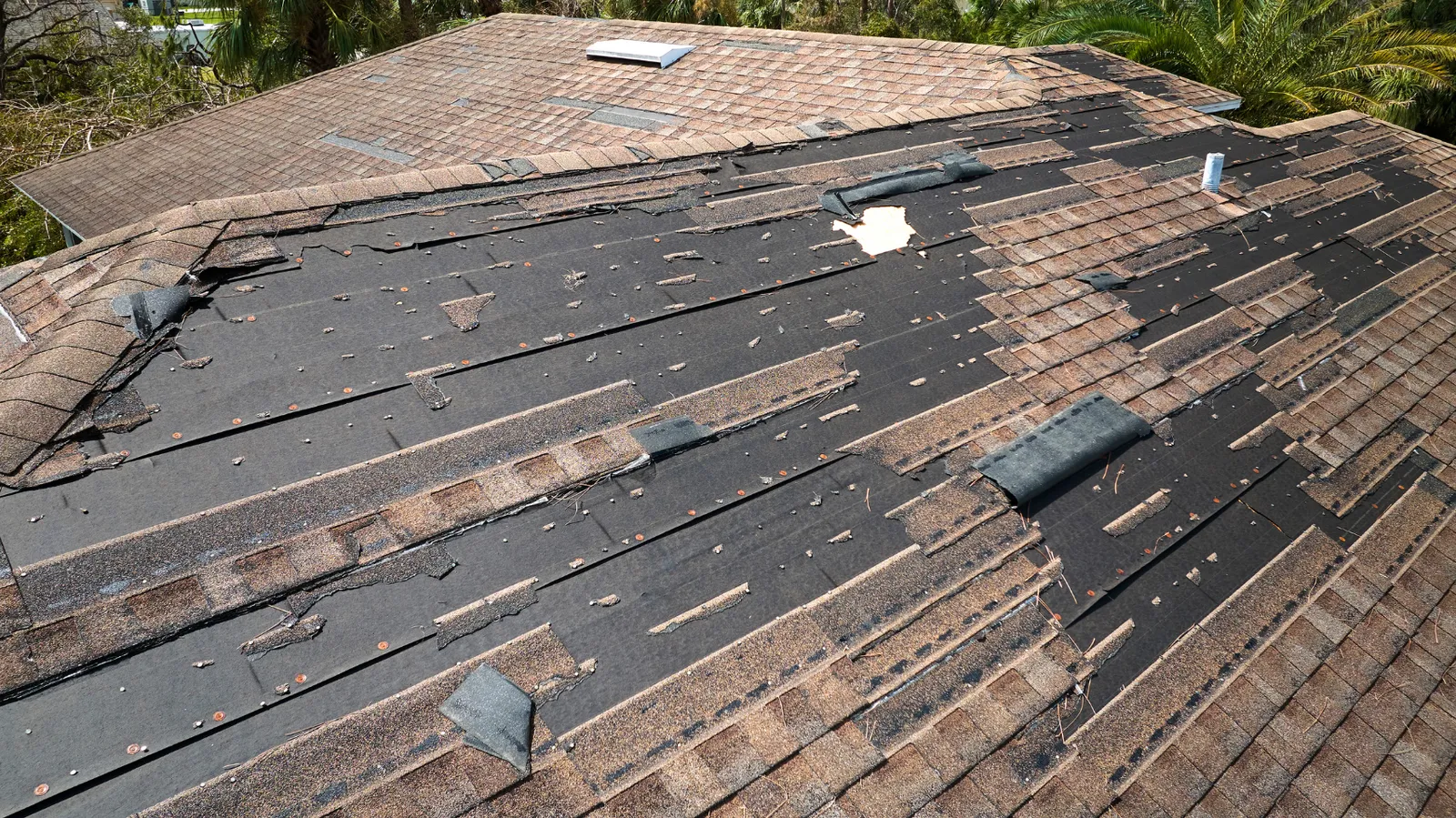
Here's the part that pays. A date is the most useful thing this record hands you, because insurance runs on dates and roofs don't carry timestamps. Bruising that lines up with a 1.75 inch report from one specific afternoon looks different from granule loss spread evenly across fifteen summers, and only one of the two is a claim.
Oklahoma runs two clocks here, and they aren't interchangeable. Policies commonly set about a year from the date of loss to file. State law separately requires a policy that time-limits wind or hail roof claims to allow filing up to 24 months after the loss, where the damage wasn't evident without an inspection. Which one governs your roof turns on facts about your roof, and those come out of a dated inspection. How the rest of it runs is on the insurance claims page.
So the record hands you a short list of afternoons, and that's where its job stops. Working those dates against your own roof isn't yours to do from the driveway. Your roofer goes slope by slope and comes back down with the two lined up: what the record says fell, and what's sitting on your shingles, dated and written out. That comes with the visit.
What each hail size leaves behind, and what the dated county storms did here, are laid out on the storm and hail damage page. If the size of the stones is the question, the shingle options page covers what an impact-rated product does and doesn't survive. And if one of these afternoons was loud at your house and nobody has been up since, call (918) 918-4228 with the date, or send the form and say which storm you have in mind.
One of these afternoons is probably sitting on your roof somewhere. Broken Arrow Roofing Co's roofers go up, work it slope by slope, and call you about which date the damage matches and what's under the granules.
Contact us