
Skylight Installation & Repair in Broken Arrow, OK
A skylight almost never leaks through the glass. It leaks at the metal woven in around it, so name the room the stain shows up in and one of our roofers can read that installation, with nothing committed on your end.
A leaking skylight is usually not leaking through the glass.
You're under a stain at the corner of a skylight shaft, trying to work out whether the unit's finished or whether somebody just flashed it badly, and Broken Arrow Roofing Co would rather you knew which before anyone prices a new one.
A skylight is a hole cut clean through a finished roof, and the glass is the piece least likely to be at fault. What keeps the water out is the flashing kit and the curb under it, metal that laps into the shingle courses one piece at a time. If your unit's got years left in it, that's what your roofer tells you, even in the weeks after a hail day when swapping it out is the easier sale.
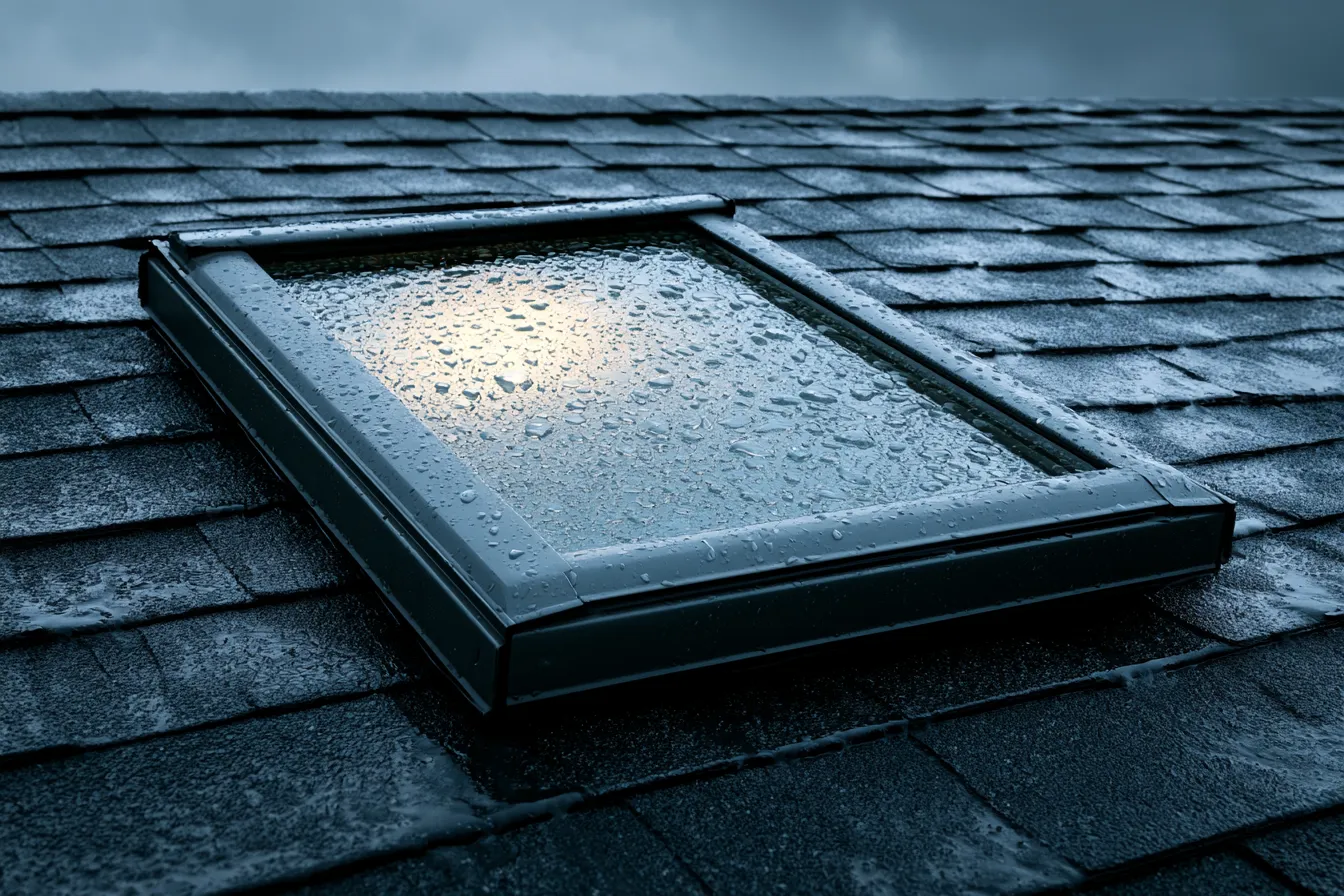
What skylight work involves on a Broken Arrow roof
Nearly all of a skylight job happens in the metal and the wood around the unit, and only one line of it touches the pane. Every item here is a handoff point, a place where water moves from one piece to the next and where it'll find any gap somebody left.
- 01The opening framed and curbed
- Rafters get cut and headed off, and the curb goes up square so the glass sits proud of the shingles. Out of square, that curb turns into a flashing leg that won't lie flat.
- 02Head, sill and step metal
- The sill piece at the bottom, step pieces up both sides, and the head piece at the top all interleave with the shingle courses. Sequence is the whole job, because one piece out of order aims water under the shingles instead of over them.
- 03Membrane sealed to the deck
- Self-adhered ice-and-water goes down around the opening and closes itself around every fastener driven through it. That matters here because every nail near a skylight is a hole somebody's got to shut.
- 04Curb and decking probed
- Soft wood around the frame is rebuilt before any new metal lands on it. New flashing over wet decking fails in the same square foot it failed the first time.
- 05The leak named first
- From the roof and from the shaft side, your roofer works out whether it's the metal, the sealant or a blown glass seal. Swap a unit on a hunch and you've kept the same water path and bought the same stain back.
- 06Photographs and a number
- What failed, what it takes to rebuild and the number all land on one page, next to photographs of the opening. Flashing disappears under shingles the day it goes on, so those pictures are the only record left of it.
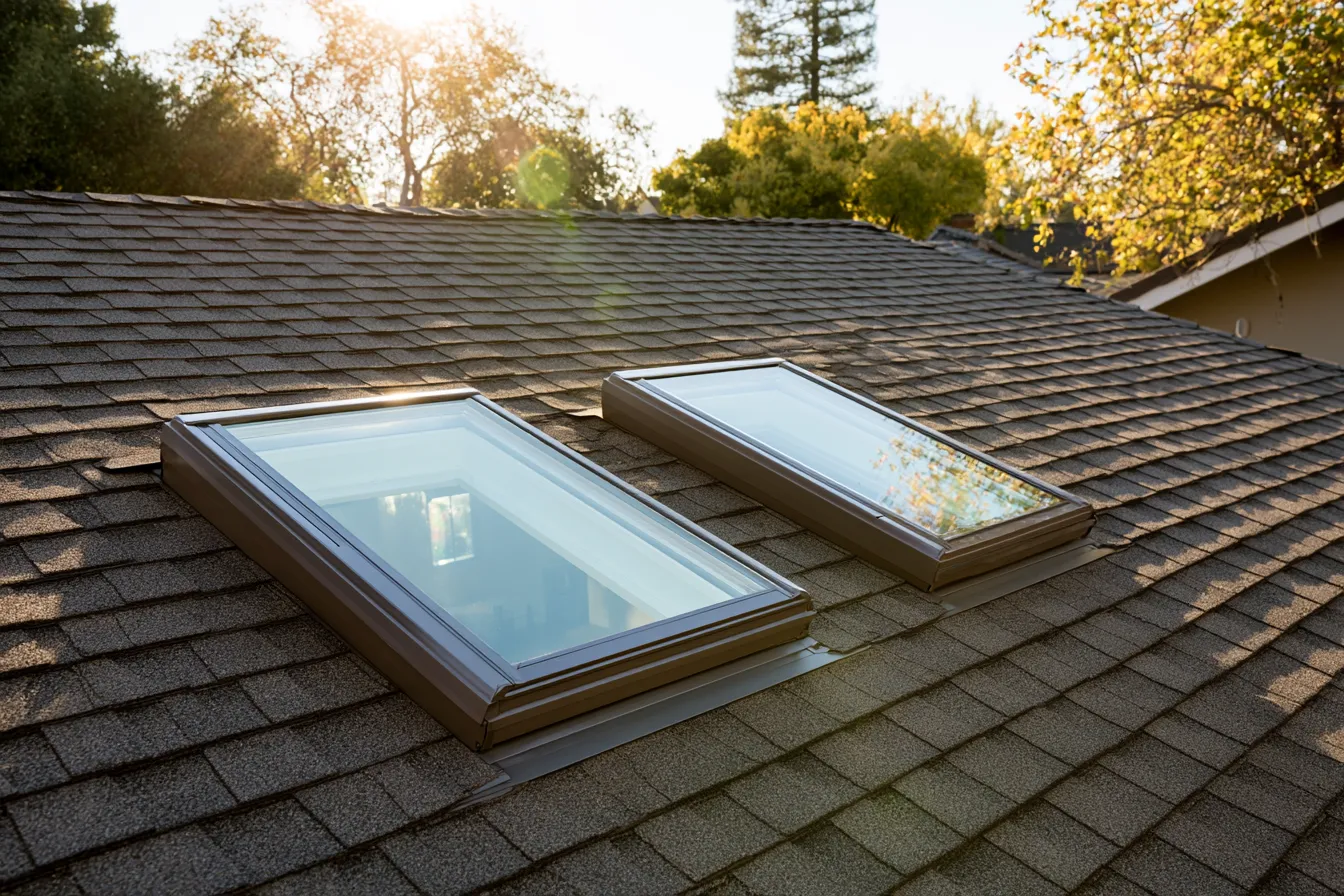
The cheapest moment for any of this is a full roof replacement. Tear-off lifts the courses the old metal was laced into, so that flashing comes off either way, and a fresh kit set while the field is open runs a fraction of the same work done afterward. A free inspection settles whether it's flashing or a roof repair.
Open it, flash it, close it back into the roof.
This isn't a long job by roofing standards, and the disruptive stretch of it is shorter still. What takes the time is sequence, because every piece has to be on before the piece that laps over it.
Open the courses
Shingles come up around the unit and the old metal comes out with them, back far enough that you can see the deck around the opening. Your roofer pulls wet or spongy sheathing at this point instead of working around it.
Rebuild the flashing
Sill, steps and head piece go back in from the bottom of the opening upward, each one lapped under the course above and over the course below. That's the step that decides the outcome, and it's why sealing over old metal isn't a repair.
Close the roof back
Courses are relaid over the new metal and the shaft inside is put right where the water came through. Your roofer photographs the flashing before the shingles cover it, because that's the last time anybody can see it.
Signs a skylight is leaking at the curb
Most of these point at metal or wood and only one points at the pane, which narrows the job a long way. Metal and wood are roof work; a fogged unit is a replacement.
- Stains at the upper corners: The shaft darkens where two runs of metal meet, and that lap is the first joint to open.
- Water only in driven rain: Wind shoving rain uphill gets under a flashing leg that a steady soaking never reaches.
- Sealant piled at the frame: Bead over bead means an earlier fix leaned on caulk to do work the metal's supposed to do.
- Wet only on cold mornings: Condensation runs down cold glass and pools at the bottom of the frame, then dries off as the day warms.
- Fog between the panes: A blown seal has let the sealed unit lose its fill, and that's glass work instead of flashing work.
Hail is the one thing on this list that can be the glass. In the county storm record, stones logged at Broken Arrow have run from quarter-sized up to golf ball, and a stone that size can craze or crack a pane outright. If you've had hail on the roof since, say so up front, because it changes where your roofer starts.
The weather a Broken Arrow skylight sits through
Broken Arrow runs a long way east and west, and the storms that matter to a skylight don't sort themselves by address. A house near the Broken Arrow Expressway and one out past County Line Road get the same June nights, and on both of them it's the metal around the opening that decides whether the ceiling stains.
- 01Hail on the glazing
- A stone big enough to bruise shingles can craze the outer pane of a sealed unit too. A crazed pane means a new unit, and the flashing around it can be perfectly fine.
- 02Wind under the laps
- Straight-line wind drives rain uphill against the underside of a flashing leg, which is a load that same detail never sees in a steady rain.
- 03Heat on the sealant
- Oklahoma summers cook the caulk at a frame long before the metal shows anything. A bead that looked fine in spring is often hard and split by the end of August.
None of that's unusual for this town, and none of it is a reason to replace a unit that isn't the problem. The difference it makes is where your roofer starts, which is why a storm walk after a hail night covers skylights and not just field shingles.
Skylight questions, answered for Broken Arrow homes
Most of what people ask about skylights turns out to be a question about the metal around them.
Q1Does a leaking skylight mean I need a new one?
Q2Should the skylight be dealt with while the roof is replaced?
Q3What does hail do to a skylight?
Q4Is a curb-mounted or a deck-mounted skylight better?
Q5Why does water show up at my skylight only in winter?
Get a skylight looked at
Name the room, and say what the weather was like when the water showed up. One of our roofers gets on the roof and comes back with what gave out and what it takes to set it right, and you walk away with the photographs either way.