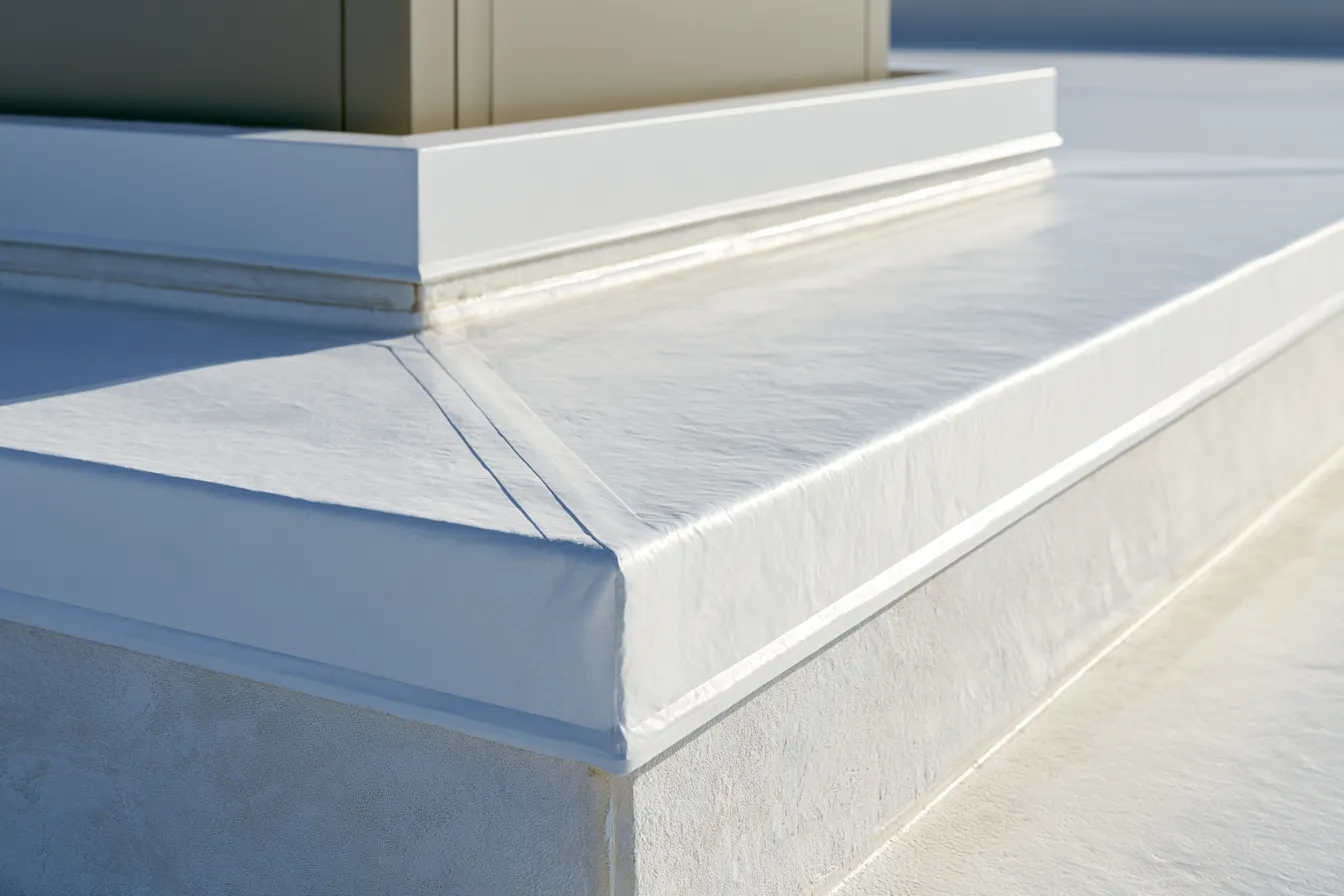
Commercial Roofing in Broken Arrow, OK
Your commercial low-slope roof is either a repair this year, a coating this year, or a replacement that has to land in a budget year. Send the building address and the roof type, and one of our roofers walks it and prices what's up there.
What decides between a coating and a new roof
Owners usually reach Broken Arrow Roofing Co with the question already formed: does this roof need replacing this year, or does it need a coating and a few more years of service? Our roofers answer that with a moisture meter, and the reading comes back to you.
Broken Arrow's flat-roof stock is storefronts, offices and light-industrial bays, schools, and apartment blocks, and what they share is a roof that takes hail without looking like it did. The building usually finds out through a tenant. None of that has to be decided this week, though. The reading keeps, and so does the estimate that comes with it, so the roof can go into a budget meeting on your timing.
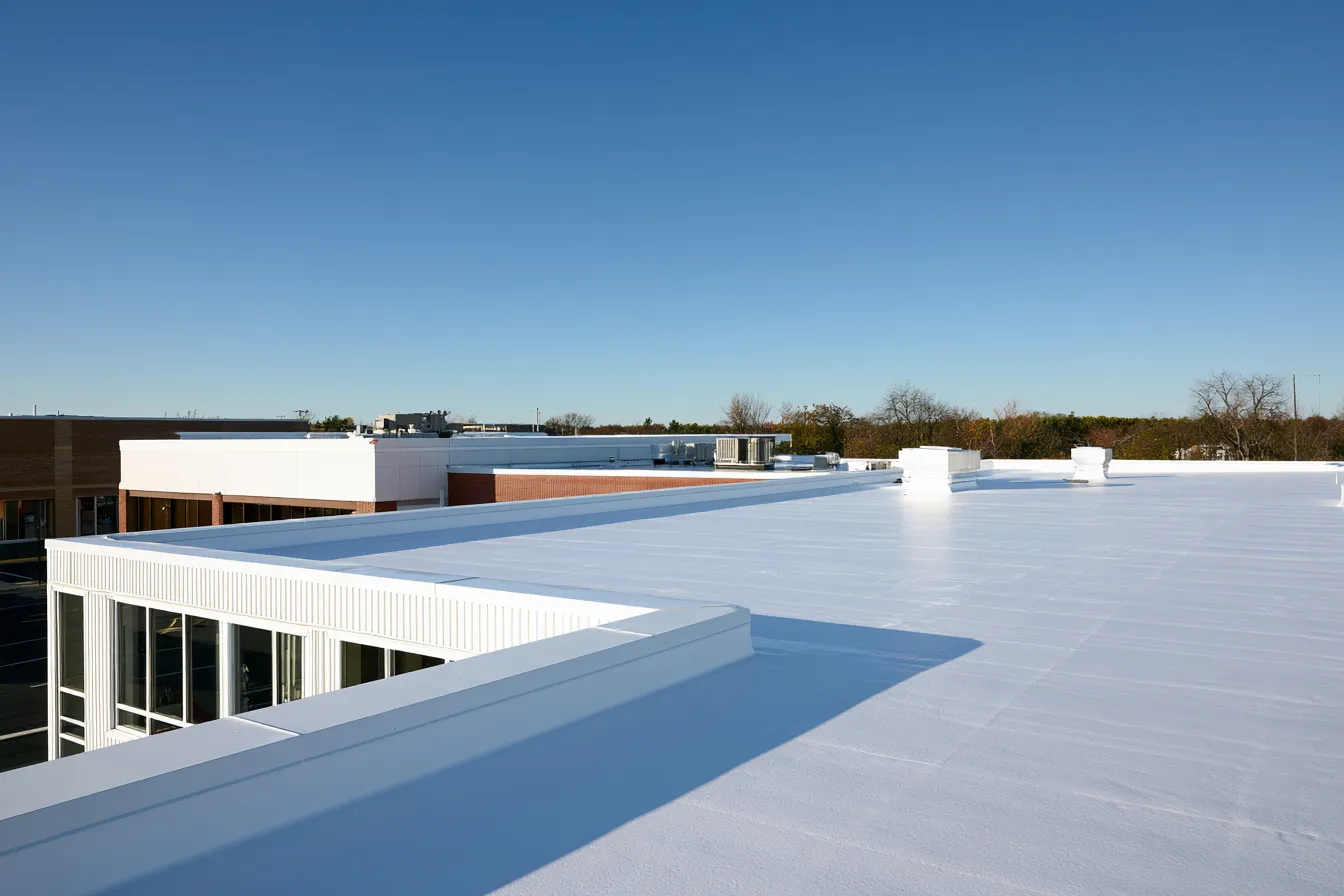
The systems that go on Broken Arrow buildings
Six systems cover almost every low-slope roof in town, and the building itself narrows the list: slope and drainage, the equipment sitting on the deck, how often somebody walks it, what the kitchen exhaust puts into the air, and how long you intend to hold the property. Coatings belong on that list on purpose. On a roof that qualifies, a renewal is the correct answer; on one that does not, it is money spent sealing water against the deck.
TPO
A white thermoplastic sheet welded at every seam, reflective enough that it sends summer sun back off a deck you are paying to cool underneath.
EPDM
Synthetic rubber with a long service record and real cold-weather flex, and its seams decide how long it lasts, because that is where an EPDM roof usually opens first.
PVC
Welded like TPO but formulated to shrug off cooking grease, animal fats, and chemical exhaust, which makes it the membrane for a building with a kitchen hood venting onto the roof.
Modified bitumen
Reinforced asphalt in rolled plies, redundant at the laps and tough enough to be walked, which suits a smaller roof or one somebody is up on monthly to service equipment.
Built-up roof
Asphalt and reinforcing felt built up in plies and finished with gravel or a cap sheet, and most owners meet it as the thing that has to come off.
Coatings
Silicone or acrylic applied over a membrane that still tests dry, resealing the surface and adding years for a fraction of a tear-off, with silicone the one that holds up where water ponds and acrylic the cheaper option that does not.
What is already on the deck closes off some of these choices before anybody gets to pick. Once a roof carries two layers of covering, or the insulation under it has taken on water, another cover is not permitted and the old roofing comes off to the deck. That is the same line a coating cannot cross, which is why the meter goes out before the material conversation does.
What a Broken Arrow commercial roof project includes
A commercial estimate is a list of assemblies, and every line on it is a decision somebody made about your building. The order they appear in is the order the work happens in, because the deck has to be right before the first fastener goes in.
- 01Survey and moisture test
- A meter and a few core cuts find water sitting in the insulation, and that reading sets the job.
- 02Tear-off or recover
- Two existing layers or a wet assembly ends the question, and the roof comes off to the deck.
- 03Insulation and cover board
- R-value to the specification, with tapered fill where the deck has no slope of its own.
- 04Membrane and attachment
- The sheet chosen for the use, and a fastening pattern engineered for the wind this county gets.
- 05Flashings, curbs, and drains
- Every pipe, hood, and parapet is one more seal, and the overflow is sized for a clogged primary.
- 06Warranty paperwork
- The manufacturer's document on the membrane and your roofer's on the installation, issued separately.
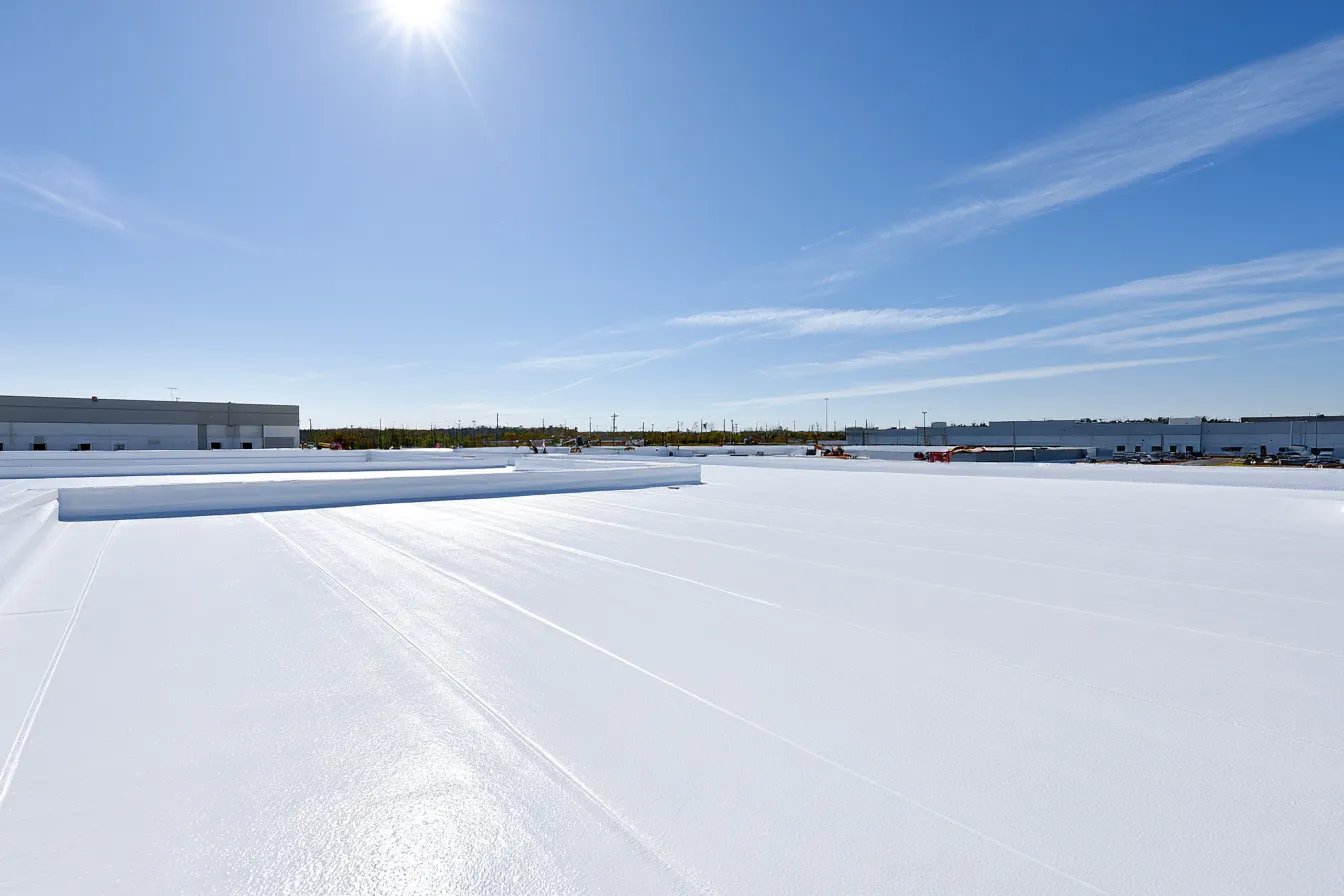
Phasing belongs in the estimate itself, with the sections and the order named on it. In Broken Arrow the permit is your roofer's to pull, at the Development Services counter in City Hall on South First Street, and Oklahoma registers roofing contractors through the state, with commercial work carrying its own endorsement on top of that registration.
How a low-slope project runs on an occupied building
Three stages, and each one ends with something in your hands. What is on the roof now, what the specification says, and what the work asks of the building while it runs.
Survey and document
Our roofer works the field, every drain, the questionable laps, the curbs and the parapet, and probes the insulation for trapped water, photographing and dating what turns up along the way. The building ends up owning a record of its own roof whether or not anything is built this year.
Write the specification
Your roofer names the membrane, the insulation and its R-value, the fastening pattern, and the drainage detail. Where a roof genuinely qualifies for more than one path, each one is priced on its own so you can compare them.
Build and close out
The system goes down to the manufacturer's specification, and the phasing is part of that specification, named section by section for an occupied building. Close-out is a walk of the finished roof with you: drains run, curbs and edge metal checked, and the punch items written down before the last section closes.
Questions Broken Arrow building owners ask first
A low-slope roof is a budget line before it is a building problem, and that changes what an owner needs to know first.
Q1Can the roof be coated instead of replaced?
Q2How long should a new low-slope roof last?
Q3The building is occupied. What does the work do to my tenants?
Q4Can I price the roof this year and build it next year?
Q5What does a manufacturer warranty cover that my roofer's does not?
Q6What does a storm do to a low-slope roof?
Get a commercial roof assessment
Give the building address and the roof type, and your roofer climbs it, meters the insulation, and comes back with the condition of the roof and a figure against a named system. The survey is yours to keep, and it holds up as the roof's record whether the work lands this budget year, the next one, or not at all.