
Roof Ventilation in Broken Arrow, OK
Air has to get into an attic before it can leave it, and a hot upstairs is usually the getting-in half. Our roofers measure both openings before anybody prices ventilation, and the timing after that is yours.
Ventilation is two halves, and one of them is usually the problem.
Why is the upstairs hot at nine at night? Usually that isn't the air conditioner's fault; it's an attic with no way to flush the heat it took on all afternoon.
Trapped heat then works on the shingles from the back, where nothing on the surface explains what it did. You don't have to know which half of your attic is short, or what any of it is called. Tell Broken Arrow Roofing Co that the upstairs runs hot, and our roofers take the attic and the ridge from there.

What balanced ventilation takes on a Broken Arrow roof
A roofer counts both ends before picking any hardware, because the exhaust half can only ever move what the intake half lets in.
- 01Soffit intake opened up
- A roofer pulls a panel and puts a light up behind the louvers, looking for paint, drifted insulation, or solid wood where an opening should be. Plenty of starved attics have vents on the outside and nothing behind them.
- 02Baffles behind the eaves
- Rigid trays sit between the insulation and the deck in each rafter bay, keeping a clear channel from the eave up over the top plate. Skip them and the next insulation job seals off the intake it was laid on top of.
- 03One exhaust type, high
- Ridge vent when the peak has the run for it, box vents when it doesn't, and only ever one of the two on a single attic. Air takes the easy path, so the weaker exhaust quits exhausting and starts letting air in.
- 04Gable openings dealt with
- A gable end left open under a ridge vent hands that ridge a shortcut, and the eaves stop feeding it. Closing the gables is part of the ridge job, not an extra beside it.
- 05Powered fans and turbines
- A fan can only move what the intake lets in, and on a shut attic it'll start pulling weather back down through the ridge. Opening the bottom is what makes any of the top hardware work.
- 06Marks on the decking
- Stains on the sheathing, corrosion on the nail shanks, insulation lying flat where it should be lofted. Those tell a roofer whether this attic has a winter problem, a summer problem, or both.
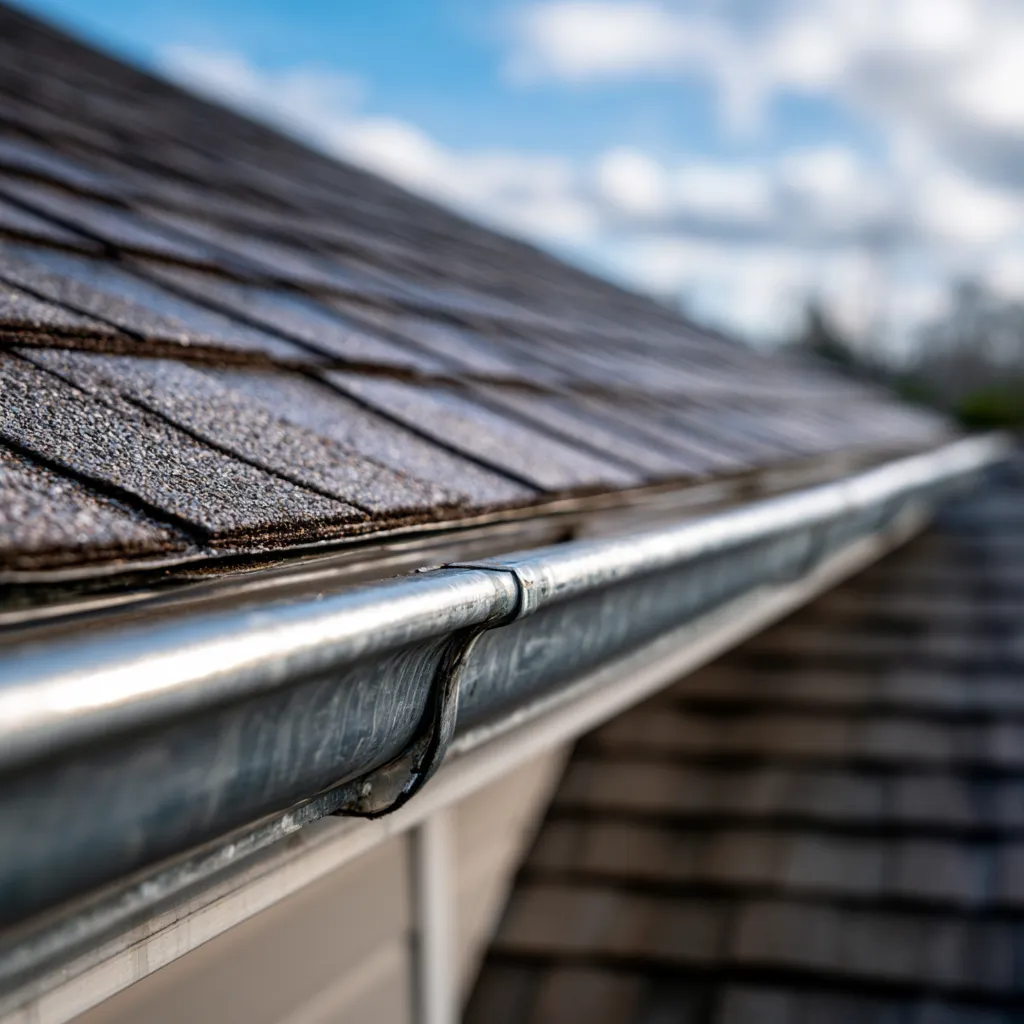
Vent work usually goes in alongside a roof replacement instead of on its own. Vents that hail has opened up belong with storm and hail repair.
Count the intake, count the exhaust, fix the shorter one.
A roofer counts what's already there before deciding what to add.
Read the attic
Where the attic is reachable, a roofer goes up through the hatch with a light and looks at the deck, the nail points and the insulation line at the eaves. That's where the difference between a hot attic and a wet one shows.
Count both openings
A roofer adds up the intake at the eaves and the exhaust up top in net free area, which is the opening left over once screens and louvers take their share. One of those two numbers is almost always the small one.
Fix the short half
The work goes to whichever side came up short, and that's the intake end far more often than the exhaust end. You get both figures and the price for closing the gap in writing before any of it is booked.
Attic signs that ventilation is short
Most of these show up inside the house, on an evening when the roof outside still looks fine from the street. That's how ventilation goes years without anybody naming it as the problem.
- Upstairs holds heat after dark: the rest of the house cools off and one floor doesn't, because the attic over it is still giving back the afternoon.
- Shingles curling early on one slope: a stalled attic bakes a shingle from the deck side, and the sunniest plane goes first.
- Damp or matted insulation: winter moisture condenses in a cold attic and flattens the insulation, which then stops insulating.
- Rust rings at the nail points: house air carries moisture up into a cold attic all winter, and the nail shanks are the coldest thing it meets.
- Soffits that look vented and aren't: paint or blown insulation behind the louvers leaves an opening that does nothing from the yard in.
- A fan running over shut soffits: with no way in at the eaves, the fan feeds itself from the closest opening on the roof and can drag rain along with it.
Any single one of these has an innocent explanation. Get two or three at once and intake is the usual answer, and a roof inspection covers the eave line and the underside of the deck as well as what shows from the curb. A starved attic that aged the shingles early can also bring a manufacturer warranty into it.
What Broken Arrow build years say about attic intake
About one house in five in Broken Arrow went up in the 2000s, and the rest of the stock spreads out on either side of that. So there's no single answer for the town: the attic over a two-story off Florence Street can be short in a completely different place than the attic over an older ranch, and you can't tell which from the driveway.
- 01Long humid summers
- Heat's only half of what an attic here has to move; the other half is water in the air. An attic that handles July fine can still be condensing on the deck come January.
- 02Insulation added over time
- Attic insulation gets added to over the years, and the eaves are where it ends up. Intake here is usually something to uncover before it's something to install.
Ventilation questions Broken Arrow attics raise
Nobody thinks about attic airflow until a July upstairs makes them, or until a report puts one line about it in front of them.
Q1Do new vents go on with a new roof?
Q2Does a whole-house fan count as attic ventilation?
Q3Why does a hot attic matter to the roof itself?
Q4How much ventilation does an attic here need?
Q5Will better ventilation lower my power bill?
Have your attic ventilation checked
Tell us how the upstairs behaves in July, and anything you noticed the last time somebody put their head through the hatch. Our roofers measure the intake and the exhaust before anybody talks hardware. If the attic's fine and the heat is coming from somewhere else, you'll hear that instead, and you can decide later what to do about it.