Two roofs can go on in the same week, same shingle off the same truck, and one of them is finished years ahead of the other. Most of the time the difference isn't on the roof at all. It's underneath it, in whether air can get into the attic down low and back out up top, every summer, for as long as the roof is on the house. Hail is the other way roofs end around here, and nobody gets a vote on that one. This one you do.
Air has to get in before any of it gets out
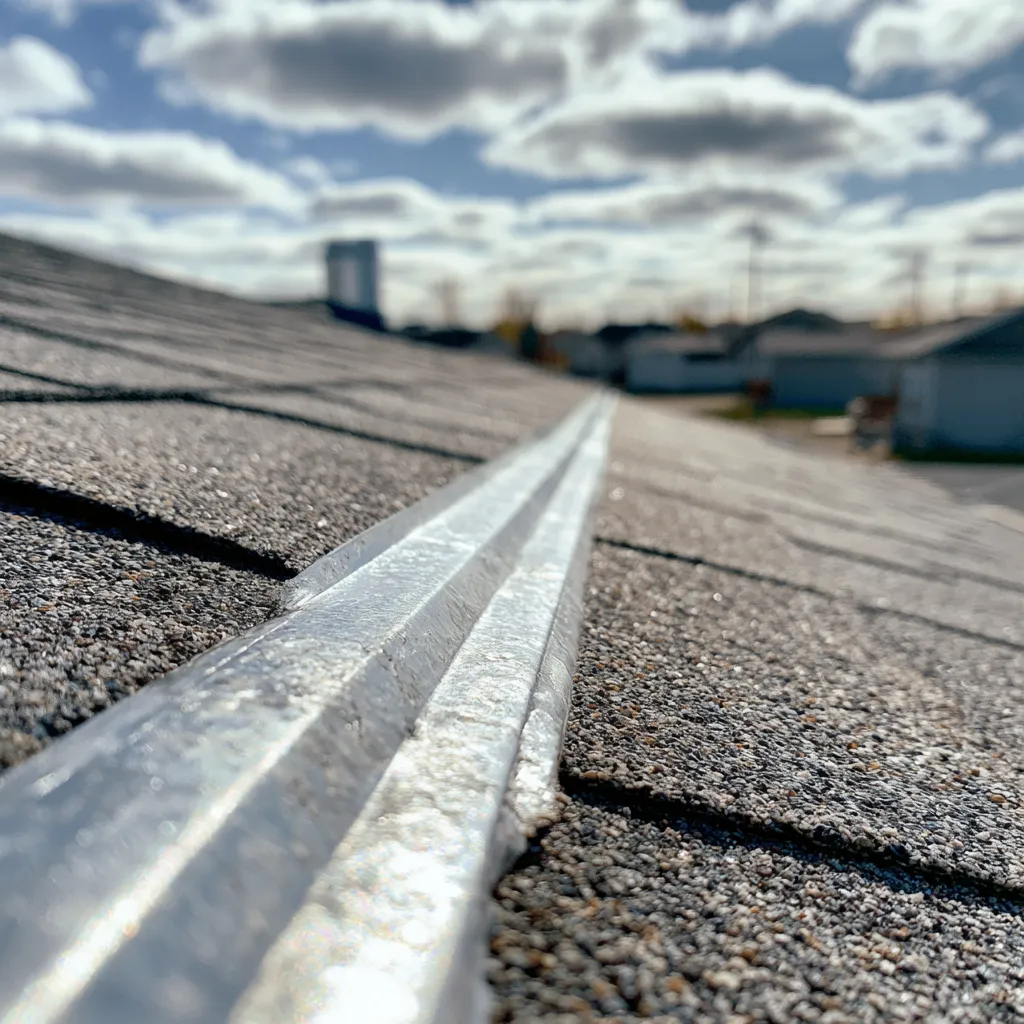
An attic runs on two openings, and they only work as a pair. Intake is the low one, tucked under the eaves in the soffit. That's the board you're looking up at when you stand under the edge of the roof. Exhaust is the high one, at or near the peak. Cool outside air comes in at the bottom, picks up heat and damp all along the back of the deck, and leaves at the top.
The pair part is the entire idea. Exhaust can't move more than intake lets in, so whichever of the two openings is smaller sets the number for both. An attic with a long ridge vent up top and soffits packed solid with blown insulation hasn't got a system. It's got one opening. From the yard the two look the same.
Intake is the half that goes missing, and it goes missing quietly. Nobody paints over a ridge vent. People do paint soffits. And when somebody blows more insulation in ten or fifteen years after the house went up, it ends up drifted right over the eaves, sitting on the gap the air was supposed to come through. None of that shows on the roof, so it doesn't come up until something else does.
The hours after the sun leaves are the ones that count
A roof deck is a wide flat slab of wood, and wood holds heat. It soaks up an Oklahoma July afternoon all day, then hands that heat back for hours, long after the sun's gone around the far side of the house. If air is moving through the attic, most of it leaves with the air. If nothing's moving, it just sits there, pressed against the underside of the shingles, well into the night.
So the number that hurts you isn't how hot the attic got at four in the afternoon. It's how many hours the shingles spent hot. A stalled attic stretches that out at both ends, on every clear day from May into September, and it keeps doing it for as long as the roof is on the house. Asphalt ages on heat and time together, which is why a roof can curl and start dropping granules years before anybody was expecting to think about it.
Nobody's street is exempt from this. It turns up on a ranch off Olive Avenue and on a two-story that went up last decade, because the year on the deed decides less than what's happened to the intake since.
A short circuit moves air without ventilating anything
Air takes the easiest way out it can find, and that's the whole reason two kinds of exhaust on one attic cause trouble. Put a powered fan, a turbine or a couple of box vents a few feet under a continuous ridge vent, and the stronger one stops pulling from soffits thirty feet away and starts pulling from the weaker one instead. The weaker one is now an intake. Nothing down at the bottom of the attic has moved.
That's a short circuit, and the reason it fools people is that the attic doesn't look dead. Air is moving. A fan is running, a ridge is venting, and both of them are working on the same few feet of air near the peak. The bottom two thirds of the deck, the part that needed it, sits as still as it did before anybody spent anything.
Gable vents do the same thing without a motor. Louvered openings in the two end walls came with a lot of houses, and left open under a new ridge vent they hand that ridge a much easier place to draw from than the eave line. The ends of the attic breathe. The middle and the bottom don't.
This is why bolting more exhaust onto a starved attic is a bad trade. It can't move more air than the soffits are letting in, so the upstairs stays hot, and now there's a fan pulling hard on the nearest opening it can find. In a driving rain that opening is the ridge, and what comes down through it is wet.
Why two identical roofs finish years apart
Roof life is an owner's question before it's a roofing one. Sixty-seven percent of the houses in Broken Arrow are lived in by the people who own them, which works out to about two in every three, so in most houses here the person who'll be paying for the next roof is already sleeping under this one. That's a long time to be holding the same shingles.
Ventilation is rarely the only thing separating two roofs, and it's usually the one still open to being changed once the shingles are down. Everything else about the roof was settled the week it went on, and the attic is the part that stays open after that.
Summer's the loud half of it. The quiet half runs all winter, when damp air out of the house rises into a cold attic, turns back into water on the first cold thing it meets, and mats down the insulation it lands on. Insulation that's gone flat has stopped insulating, so one shut soffit is charging you in both seasons.
Tear-off week is the cheap week to fix it
All of this is cheap while the roof is open and expensive once it's closed back up. Cutting a slot at the ridge, setting trays at the eaves so insulation can't creep back over the intake, opening soffit panels that were painted shut years ago: that's ordinary work on a stripped deck. Every one of those turns into its own visit, with its own setup, once the new shingles are down over it.
There's a second reason not to leave it. Shingle manufacturers write a ventilation requirement into their material coverage, and a starved attic is standard grounds for turning down a claim on a roof that aged early. What each of the two warranties on a roof covers is set out in the roofing warranty guide.
The measuring is the small part of it. Our roofers count what's open at the eaves and what's open at the peak, and the figures land on the same estimate as the roof, so the attic isn't a second decision you have to go and make on your own later. What that work involves is on the roof ventilation page, and the layer-by-layer build of a roof covers the parts all that air is running under. Call (918) 918-4228, or send the form and say what the upstairs does in July.
If the upstairs runs hot and nobody has been up in the attic for years, that's the visit to book. Broken Arrow Roofing Co's roofers start on the roof and, where the attic is reachable, keep going inside with a light. Then you hear which of the two openings is the short one and what it'll take to open it up.
Contact us