
Gutter Installation & Repair in Broken Arrow, OK
Water coming over the front edge in a hard rain, running down the siding, or pooling against the foundation is what puts most people on this page. You get every run of the gutter installation itemized before anybody orders coil.
Gutters fail quietly, and the roof is not usually where you notice.
A gutter is roof hardware, and when a run gives up, the first thing it costs is the board it hangs on. You don't have to know whether that's a clog, a sag, or a trough that was never big enough for the roof over it, and you don't have to work it out yourself, because your roofer goes up the ladder and tells you which one you've got.
Give it two more spring storm seasons and the job changes shape. Water spilling behind the trough keeps the fascia damp, the board softens, the hangers won't bite any more, and what started as a gutter fix turns into carpentry too. There's no rush on your end. Looking early just keeps it the smaller of the two jobs.
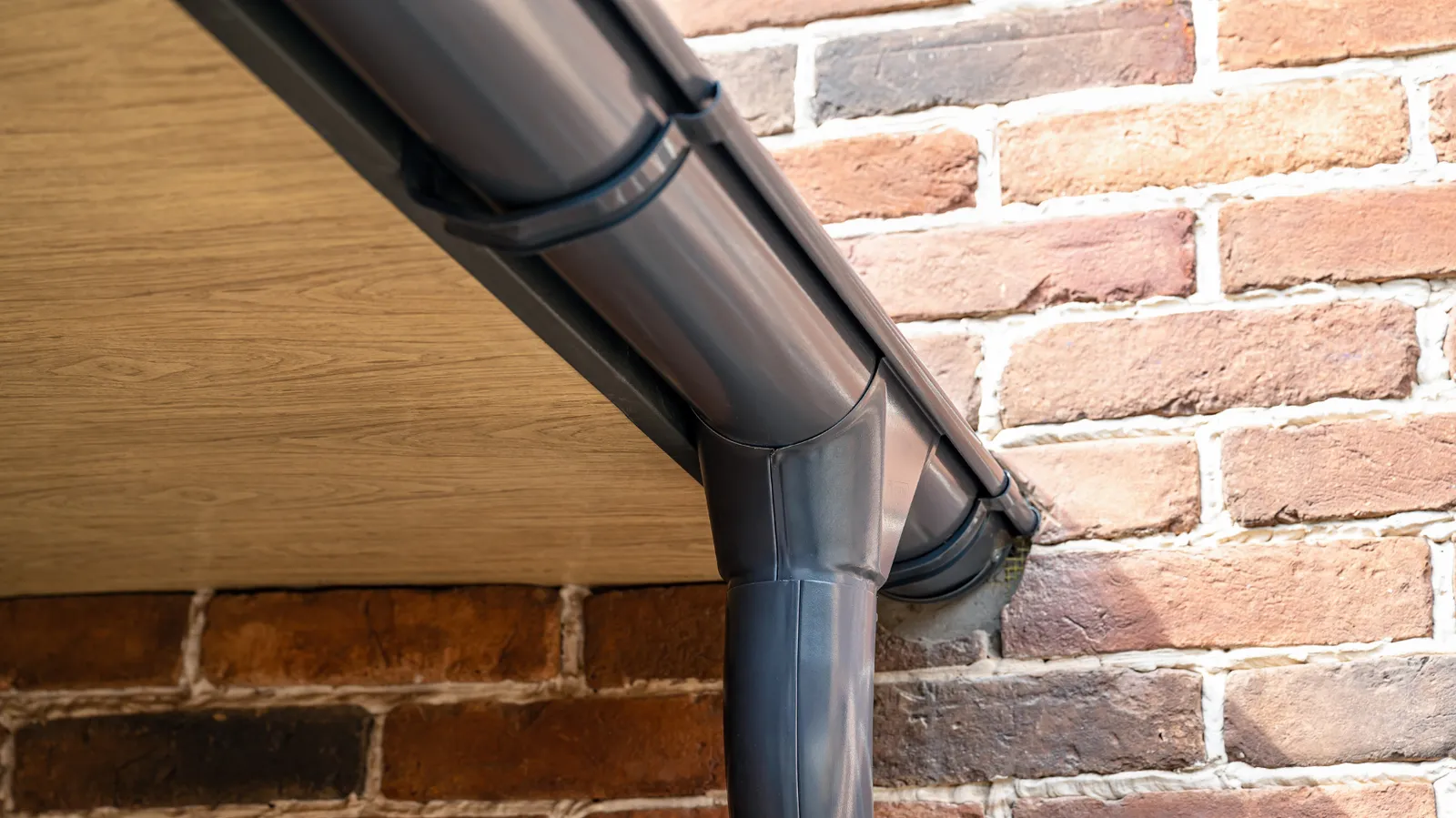
What gutter work involves on a Broken Arrow home
The trough is the part everybody pictures, and it's the smallest decision in the job. Sizing, fall, hanger spacing, outlet count, and the condition of the fascia behind it all decide whether a run works, and any one of them can be why yours won't keep up.
- 01Sizing off roof area
- Five-inch K-style handles an ordinary house, and a big, steep, or cut-up roof sheds fast enough to want six. The call comes off the roof area draining into each run and the pitch above it, so the look of the eave doesn't decide it.
- 02Seamless runs formed on site
- Your roofer rolls the run from coil in the driveway to the exact length of the eave, so you don't get a seam anywhere but the corners and the outlets. Sectional gutter puts a joint every ten to sixteen feet, and every joint is a future drip.
- 03Hangers and their spacing
- Hidden hangers screw through the trough into the fascia, and how close together they sit is what holds the line straight under a full run of water. Spacing tightens up where ice and heavy debris are in play, because a loaded trough won't hold across a wide gap.
- 04Fall toward the outlet
- A run needs enough drop toward the outlet to empty clean, and little enough that you can't see it running downhill from the street. Water standing in the trough is dead weight, and it works the hangers loose a bit more every storm.
- 05Downspouts and outlet size
- Downspouts are half the system, and the outlet size follows the trough, so whatever was hanging there before doesn't set it. A wide gutter feeding one undersized outlet still comes over the front in a hard rain.
- 06The fascia behind it all
- Hangers don't bite in soft board, so your roofer probes the fascia before anybody orders coil. Rot behind the trough is a repair in its own right, and it happens while the edge is still open.
- 07Drip edge at the seam
- The trough has to sit so water leaving the drip edge lands inside it instead of behind it. That handoff at the roof edge is what keeps the fascia dry, and it's the first thing your roofer looks at on a run hung without touching the roof.
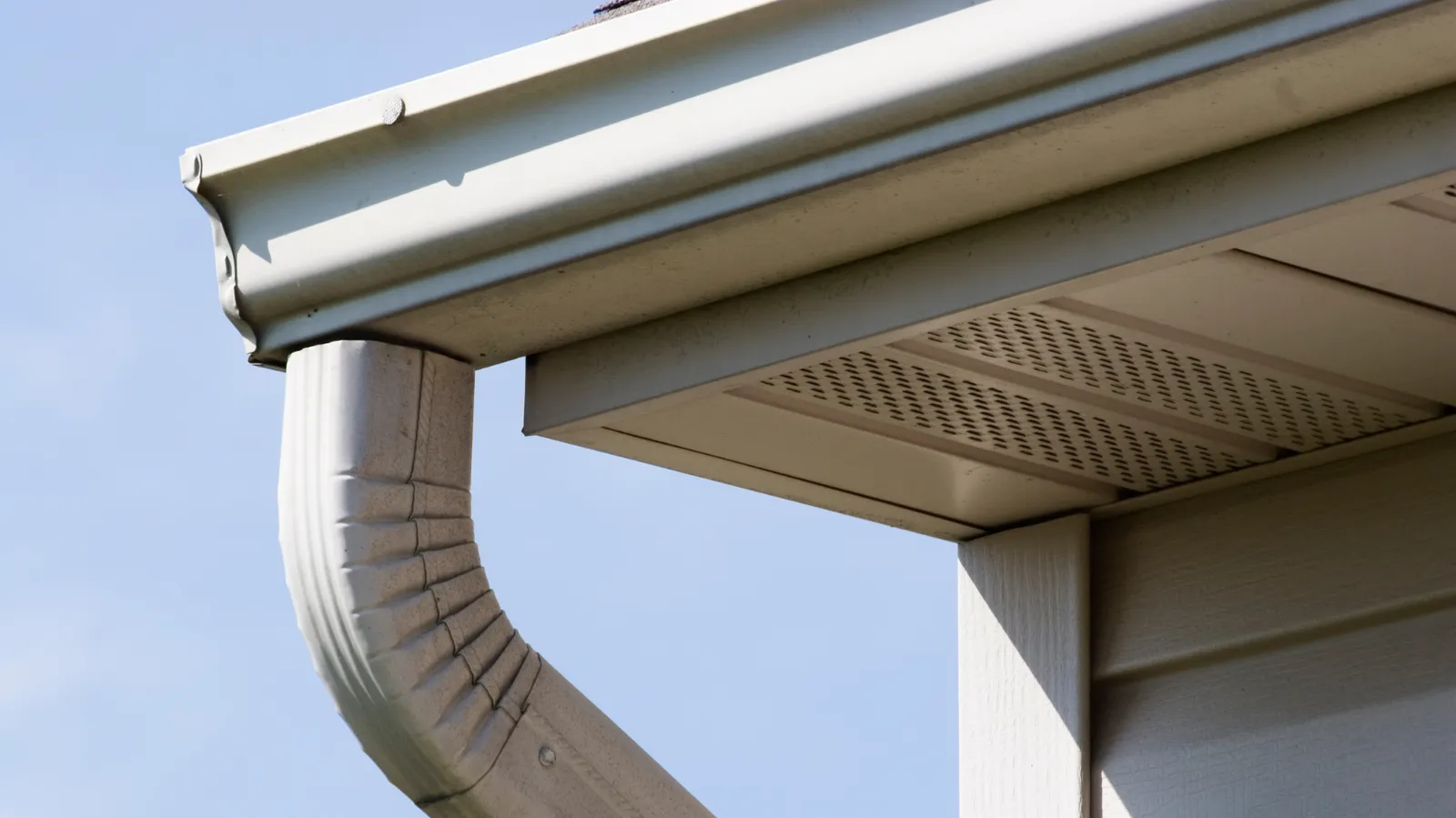
Gutter work is cheapest while the roof edge is already open, so a new run often goes up alongside a roof replacement. The soffit behind the fascia is where the attic draws its intake air, and your roofer looks at that venting while the edge is apart; attic ventilation and roof life explains what it changes.
Measured on your Broken Arrow house, formed on site, hung on sound wood.
Every eave is a different length with a different roof draining onto it, so none of this comes off a shelf. The measuring happens on your house, and the forming happens in your driveway.
Measure and probe
Your roofer measures every run from the ladder and probes the fascia behind the old trough while they're up there. That's where roof area, pitch, and the condition of the board turn into a sizing decision.
Formed on site
The trough comes off a coil of aluminum in your driveway, rolled to the exact length of the eave. A run made that way doesn't carry a seam in the middle of it, which is where sectional gutter starts leaking first.
Hung and pitched
Hidden hangers go through the trough into solid fascia, spaced close enough to hold the line under a full load of water. The fall toward each outlet is set so the run empties clean without reading crooked from the street.
Signs a gutter run is failing
A gutter fails quietly, and most of what follows only shows itself while it's raining. None of it needs a diagnosis from you; noticing one of them is enough to get the run looked at.
- Watch the front edge mid-storm: water clearing the roof and coming over the trough points at a clog when it falls in one place, and at an undersized run when it spills the whole length.
- Look under the gutter line: dark staining, blistered paint, or wood that gives under a thumb means the run's been spilling behind itself for a while.
- Sight down the run: a trough that dips between hangers or stands off the house isn't holding the board behind it any more.
- Check the trough days after rain: water still sitting in it means the run isn't draining, either from lost fall or a plugged outlet, and that standing weight works the hangers loose.
- Notice drips at the corners: sealant doesn't last as long as the gutter does, so on an older sectional run every joint is on the same clock.
- Look at the ground line: mud splashed up the wall or a trench cut under the drip line is roof water landing against the house instead of away from it.
Hail heavy enough to bruise a roof dents aluminum on the way past, and the county storm record logs golf-ball hail at Broken Arrow itself. That is why coil gauge sits on the estimate at all: .027 aluminum is the long-standing residential thickness, and .032 is the heavier gauge that holds its shape better under hail and under a ladder. If a storm is what put you here, storm and hail work and the gutter line get read on the same trip.
Gutter questions Broken Arrow homeowners ask
These answers describe the general case for a house here. Your own eaves get measured before anything is quoted.
Q1What size gutter does my house need?
Q2Do gutter guards work?
Q3Do the gutters go on with a new roof, or after it?
Q4The fascia behind my gutter is rotted. Does that change the job?
Q5How many downspouts should a run have?
Q6Can one bad section be repaired, or does the whole run come off?
Get your gutters looked at
Your roofer walks the eaves, measures every run, and checks the wood under the old trough while they're up there. Send the form or call to get that visit booked, and there's no deadline on the quote that comes back.